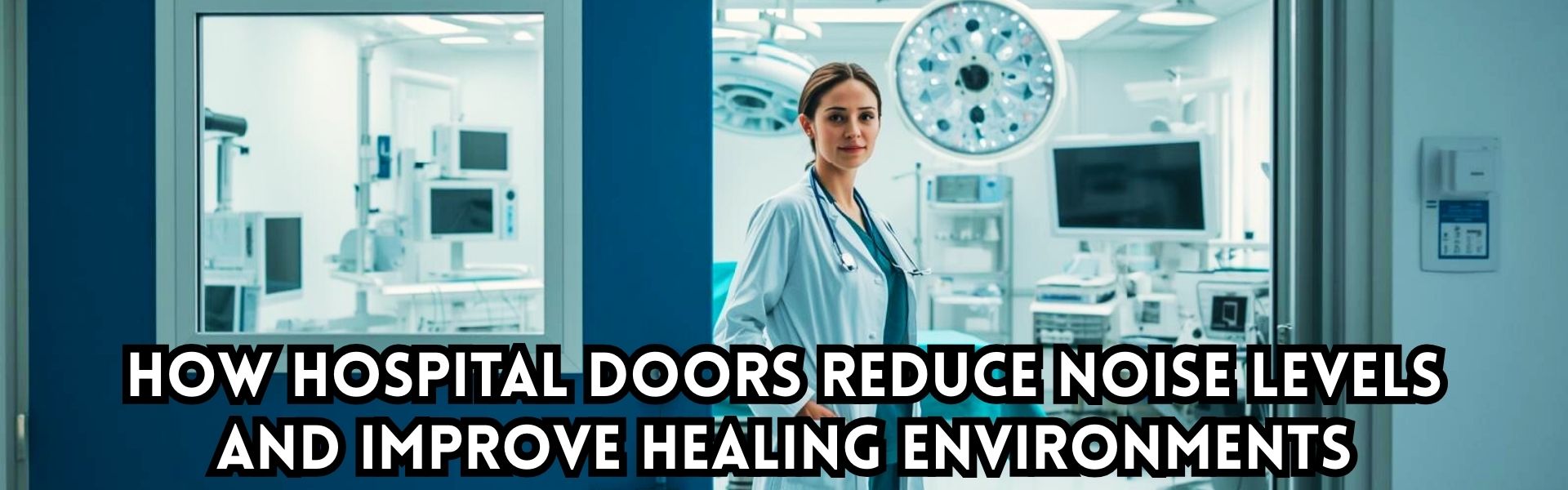
Hospitals are meant to heal, but anyone who has worked inside a busy facility knows how noisy they can become. Trolley movement, equipment alarms, staff conversations, pressure differentials, and frequent door operations all add to background noise. In sensitive areas like operation theatres, ICUs, recovery rooms, and neonatal units, excessive noise is not just an inconvenience. It directly affects patient recovery, staff performance, and overall clinical outcomes.
From years of hands-on work with OT doors, cleanroom doors, and ICU door systems across Indian hospitals, one thing is clear. Door design plays a far bigger role in acoustic control than most planners initially realise. When specified and installed correctly, hospital doors significantly reduce noise transmission while supporting hygiene, fire safety, and regulatory compliance.
Why Noise Control Matters in Hospitals
Impact on Patient Recovery
Multiple clinical studies and WHO guidance highlight that high noise levels increase patient stress, disturb sleep cycles, and can delay healing. In ICUs and post-operative recovery areas, uninterrupted rest is critical. Noise intrusion through poorly sealed doors often becomes the weakest point in otherwise well-designed spaces.
Impact on Medical Staff
Noise fatigue affects concentration and increases the risk of errors, especially in OTs and critical care areas. A quieter environment supports better communication, focus, and decision-making during procedures.
Regulatory and Design Expectations
Modern hospital design guidelines increasingly emphasise acoustic comfort alongside infection control and fire safety. NABH accreditation, good hospital engineering practices, and international standards all encourage noise reduction as part of patient-centric infrastructure.
How Hospital Doors Contribute to Noise Reduction
Hospital doors are not just barriers for access control. In clinical environments, they function as acoustic buffers between noisy corridors and sensitive zones.
Sound Transmission Through Doors
Noise typically enters through:
- Gaps around door frames
- Hollow or lightweight door panels
- Poor sealing at thresholds
- Frequent door openings without controlled closing mechanisms
High-performance OT doors and cleanroom doors are engineered specifically to address these weak points.
Key Door Design Features That Reduce Noise
1. Door Core Materials
The internal construction of the door leaf has a major impact on sound insulation.
- PUF insulated cores provide excellent sound attenuation while also offering thermal insulation.
- Solid-core or composite panels perform significantly better than hollow doors commonly used in non-clinical buildings.
This is why PUF insulated doors are widely preferred in operation theatres, ICUs, and isolation rooms. You can explore such systems under PUF Insulated Doors and related applications in healthcare environments.
2. Airtight Sealing Systems
Sound travels easily through air gaps. Even a small clearance around the door perimeter can allow significant noise leakage.
High-quality hospital doors use:
- Continuous EPDM or silicone gaskets
- Compression seals that engage when the door closes
- Drop-down seals at the bottom where required
These sealing systems are also essential for maintaining pressure differentials in OTs and cleanrooms, aligning with cleanroom air pressure requirements, ISO 14644 validation requirements and GMP requirements.
3. Flush Door and Frame Design
Protruding edges and uneven surfaces create vibration points that transmit sound.
Modern operation theatre doors and ICU doors are designed with:
- Flush panel construction
- Seamless integration with wall panels
- Minimal joints and crevices
This not only improves acoustics but also supports infection control, as required by WHO GMP and NABH guidelines. Relevant options are detailed under Operation Theatre Doors and ICU Doors.
4. Controlled Door Automation
Manual doors that slam shut are a major source of noise in hospitals.
Automated or semi-automatic door systems help by:
- Ensuring smooth, controlled opening and closing
- Reducing impact noise
- Maintaining consistent sealing every time
In high-traffic zones like OTs and ICUs, automation also improves workflow and reduces physical contact, supporting hygiene protocols.
5. Fire-Rated and Acoustic Compatibility
There is often a misconception that fire-rated doors compromise acoustic performance. In reality, properly designed fire exit doors and fire-rated OT doors can achieve both objectives.
Fire-rated hospital doors:
- Use dense core materials that naturally reduce sound transmission
- Include tested sealing systems for smoke and noise containment
- Comply with Indian fire safety norms while supporting acoustic comfort
You can review compliant options under Fire Exit Doors.
Noise Control in Specific Hospital Areas
Operation Theatres
OTs demand strict control over noise to maintain concentration and sterile conditions. OT doors must:
- Prevent corridor noise from entering
- Seal effectively to maintain positive pressure
- Operate quietly without vibration
These requirements are typically integrated as part of Modular Operation Theatres and broader Cleanroom Solutions.
ICUs and Critical Care Units
In ICUs, patients are often conscious and highly sensitive to noise. Door systems here must balance visibility, access, and acoustic control. Proper ICU doors reduce alarm spillover from corridors and allow patients to rest without constant disturbance.
Diagnostics and Laboratories
Noise control is equally important in diagnostic labs and clean environments, where equipment vibration and human movement can affect accuracy. Well-sealed cleanroom doors help isolate sensitive areas while maintaining required cleanliness levels. Refer to Cleanroom Doors and Diagnostics & Laboratories.
Compliance with Healthcare Standards
Professionally designed hospital door systems align with multiple standards:
- WHO GMP and Schedule M for pharmaceutical and sterile environments
- ISO 14644 for cleanroom classification and airflow control
- NABH expectations for patient safety, comfort, and infrastructure quality
- Fire safety norms applicable under Indian building and hospital codes
Noise reduction is not an isolated feature. It is a byproduct of correct material selection, sealing, automation, and installation as per these standards.
Common Mistakes That Increase Hospital Noise
From on-site audits, some recurring issues include:
- Using commercial-grade doors instead of healthcare-specific doors
- Ignoring sealing quality during installation
- Poor coordination between civil work and door frames
- Retrofitting automation on non-compatible doors
These shortcuts often lead to higher noise levels, increased maintenance, and non-compliance during inspections.
Choosing the Right Hospital Door Partner
Hospitals should work with manufacturers and solution providers who understand:
- Clinical workflows
- Indian healthcare regulations
- Integration with HVAC, pressure control, and fire systems
- Long-term durability in high-use environments
A solution-oriented approach is especially important for facilities serving multiple sectors such as Hospitals & Surgical Centres, Pharmaceuticals, and other clean environments listed under Industries We Serve.
Conclusion
Noise reduction in hospitals is not achieved through wall treatments alone. Doors are one of the most critical yet overlooked components in creating calm, healing environments. Properly engineered OT doors, ICU doors, and cleanroom doors reduce sound transmission, support infection control, comply with regulatory standards, and improve overall patient outcomes.
When hospitals invest in the right door systems from the planning stage, they see long-term benefits in patient satisfaction, staff efficiency, and regulatory compliance.
For more technical insights and solutions, explore our Products, Services, or visit our Blog. Additionally, the World Health Organization provides guidance on hospital environment and patient safety considerations here.