Hospital accreditation is often viewed as a documentation-heavy exercise, but in reality, it is a test of how well a hospital’s infrastructure supports safe clinical practices. Many hospitals prepare extensively on policies, training records, and clinical protocols, only to face repeated observations on physical infrastructure. Among these, hospital doors, particularly in critical areas, frequently become a point of non-compliance.
Operation theatre doors, ICU doors, and cleanroom doors are not treated as architectural accessories by accreditation bodies. They are evaluated as functional components that directly affect infection control, pressure management, fire safety, and clinical workflow. When door systems are inadequately designed or incorrectly installed, they create gaps that delay accreditation timelines and require corrective actions.
Hospitals that understand the role of door systems early in the project lifecycle tend to move through accreditation processes faster, with fewer infrastructure-related non-conformities.
Why Hospital Doors Matter in Accreditation Assessments
Accreditation frameworks such as NABH, WHO guidelines, GMP, ISO 14644, and Schedule M approach hospital infrastructure from a risk management perspective. Assessors are trained to identify elements that could compromise patient safety, staff safety, or infection control.
Doors are one of the most scrutinised elements because they sit between controlled and uncontrolled environments. A door that fails to seal properly, uses inappropriate materials, or disrupts airflow can negate the effectiveness of an entire HVAC or cleanroom system.
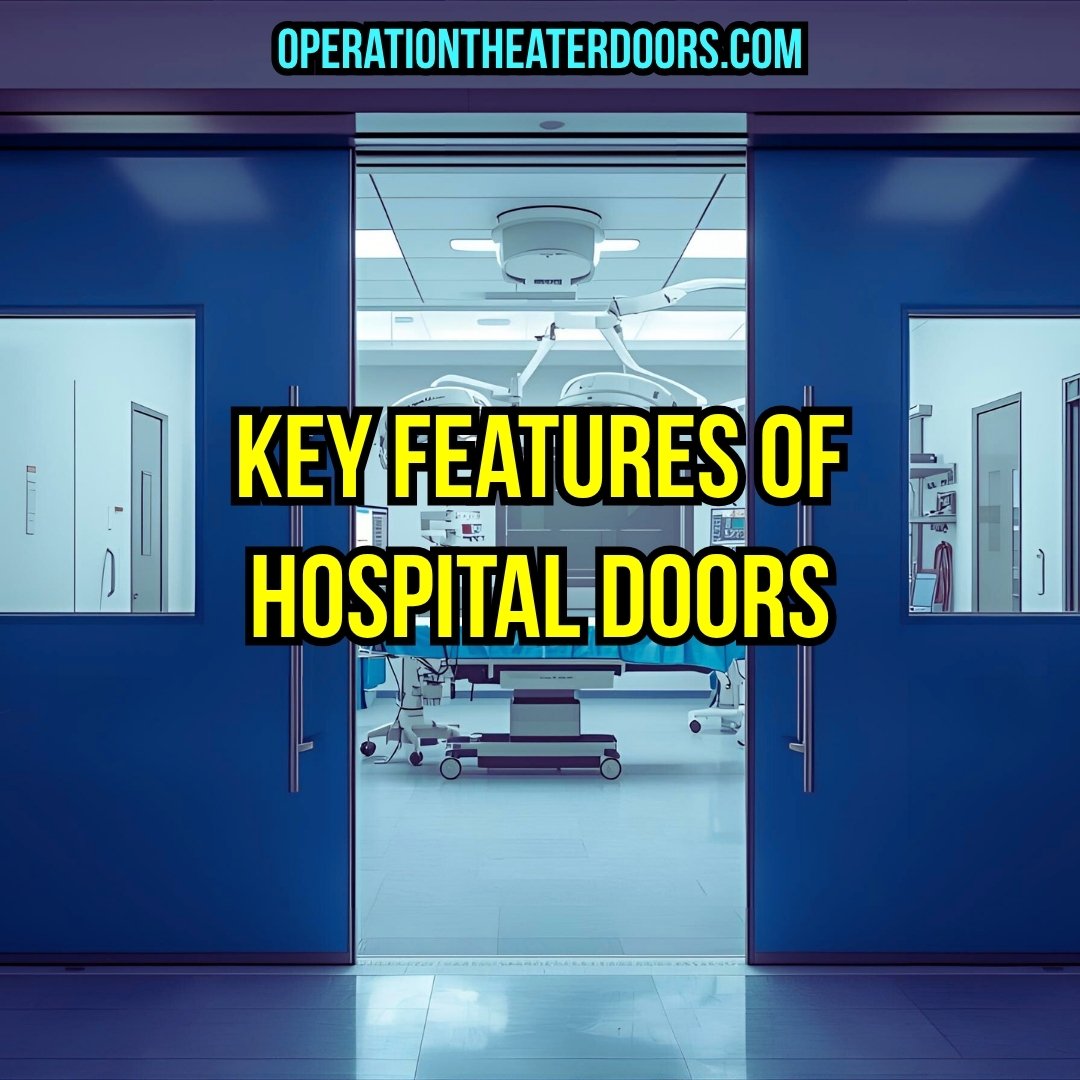
During inspections, doors are evaluated for:
- Hygiene and cleanability
- Airtightness and pressure retention
- Fire resistance and emergency egress
- Ease of movement for patients and staff
- Integration with clinical workflow and zoning
A single deficiency in any of these areas can lead to observations that delay accreditation or require redesign.
Operation Theatre Doors and Their Role in Faster OT Accreditation
Operation theatres operate under strict environmental controls. Positive pressure, controlled air changes, and sterile conditions are mandatory for safe surgical outcomes. OT doors play a critical role in maintaining these conditions.
Purpose-designed operation theatre doors are built with insulated cores, seamless metal skins, and precision-engineered sealing systems. These features ensure that when the door is closed, pressure inside the OT remains stable and contamination ingress is minimised.
Sliding OT doors are widely preferred because they reduce air turbulence compared to swing doors. Automated operation further reduces touchpoints, which supports infection control protocols. Manual doors, especially in high-volume theatres, often become a concern during audits due to frequent contact and inconsistent closure.
Assessors routinely check:
- Door closing integrity
- Seal condition and alignment
- Surface finish and ease of cleaning
- Compatibility with OT pressure monitoring systems
Hospitals that install compliant OT door systems as part of their overall OT design face fewer corrective actions during NABH and WHO assessments.
You can review purpose-built OT and ICU door systems here: Operation Theater Doors
Cleanroom Doors and ISO 14644 Compliance
Cleanroom environments are governed by ISO 14644, which focuses on particle control, airflow management, and pressure differentials. In these environments, doors are considered part of the cleanroom envelope, not independent elements.
Cleanroom doors must be flush on both sides to prevent dust accumulation. Frames must integrate seamlessly with wall panels to avoid gaps and crevices. Even minor discontinuities can become particle traps and lead to non-compliance during particle count testing.
Pressure stability is another critical factor. Cleanroom doors must maintain airtightness to support pressure cascades between adjacent areas. Interlocking mechanisms are often required to prevent two doors from opening simultaneously, which could collapse pressure control.
Assessors frequently ask for:
- Pressure test results
- Door material specifications
- Details of sealing mechanisms
- Interlocking logic and fail-safe operation
Hospitals and laboratories that use dedicated cleanroom door systems designed for their classification level clear ISO-related audits more smoothly than those using adapted commercial doors.
ICU Doors and Infection Prevention Requirements
Intensive Care Units present unique challenges. Doors in ICUs must balance visibility, accessibility, acoustic control, and isolation requirements.
Glass ICU doors with integrated blinds allow continuous patient observation while maintaining privacy. Airtight seals are essential for isolation rooms, where negative or positive pressure must be maintained depending on clinical use.
In many projects, ICU doors are treated as standard glass partitions with added hardware. During inspections, such solutions often fail pressure integrity checks or show inadequate sealing.
Accreditation teams look closely at:
- Door sealing effectiveness
- Ease of emergency access
- Compatibility with bed and equipment movement
- Acoustic performance for patient comfort
Purpose-designed ICU doors help avoid repeat inspections and rework, accelerating accreditation timelines.
Material Selection and Hygiene Control in Hospital Doors
Material selection is one of the most common reasons for infrastructure-related non-conformities. Accreditation bodies expect materials used in critical areas to withstand frequent cleaning, chemical exposure, and humidity without degradation.
PUF insulated doors with pre-coated steel or stainless steel skins are widely accepted in OTs, ICUs, and cleanrooms. These materials are non-porous, impact-resistant, and easy to disinfect. They do not absorb moisture or harbour microbial growth.
Edges and junctions are equally important. Poorly finished edges, exposed fasteners, or uneven joints create hygiene risks. Flush construction and concealed fixings are preferred in all critical zones.
Hospitals that prioritise lifecycle performance over initial cost experience fewer hygiene-related observations during accreditation.
Sealing Systems and Pressure Retention
Pressure control is a core requirement in operation theatres, isolation rooms, and cleanrooms. Doors are often the weakest link in pressure-controlled spaces.
High-quality hospital doors use continuous perimeter gaskets, drop-down seals, or magnetic sealing systems to ensure airtight closure. Poor sealing leads to pressure loss, alarms, and failed validation reports.
During accreditation, assessors may request pressure logs and test results. If door leakage is detected, hospitals may need to revalidate HVAC systems, causing significant delays.
Specifying door sealing performance at the design stage is one of the most effective ways to prevent such issues.
Automation, Access Control, and Workflow Efficiency
Accreditation is not limited to static compliance. Assessors also evaluate how infrastructure supports safe and efficient workflows.
Automated doors reduce touch contamination and improve movement efficiency in sterile areas. Access control integration ensures that only authorised personnel enter restricted zones.
Doors that obstruct trolleys, collide with equipment, or slow down emergency movement are flagged as operational risks. These issues often arise when doors are selected without considering clinical workflow.
Hospitals that integrate door systems into overall workflow planning demonstrate better preparedness during inspections.
Fire Safety and Life Safety Compliance
Fire safety compliance is mandatory under hospital accreditation frameworks. Fire-rated doors must meet tested performance standards and be installed with appropriate hardware.
Fire exit doors require valid certification, panic hardware, and proper signage. Inadequately certified or incorrectly installed fire doors are among the fastest ways to fail a safety audit.
Documentation is critical. Assessors expect fire test certificates, installation records, and maintenance logs. Hospitals that source fire doors from reliable manufacturers face fewer safety-related delays.
Documentation, Traceability, and Audit Readiness
Accreditation success depends as much on documentation as on physical installation. Door systems must be supported by clear specifications, test certificates, and maintenance guidelines.
Hospitals often struggle when doors are sourced from multiple vendors, each providing partial documentation. Turnkey providers with in-house design and manufacturing capabilities usually offer better traceability.
Complete documentation reduces clarification cycles during audits and speeds up closure of observations.
The Advantage of Turnkey Door Integration
Accreditation is a system-level evaluation. Doors must work in harmony with walls, ceilings, HVAC systems, and clinical workflows.
Turnkey integration ensures that door systems are designed as part of modular operation theatres, cleanroom solutions, and ICU setups rather than retrofitted later. This approach reduces conflicts, improves validation outcomes, and shortens accreditation timelines.
Hospitals that adopt turnkey infrastructure strategies consistently report smoother accreditation journeys.
You can explore integrated healthcare infrastructure solutions here: Turnkey Projects
Long-Term Impact Beyond Accreditation
While faster accreditation is the immediate benefit, the long-term value of well-designed hospital doors is often greater. Stable pressure performance, reduced maintenance, easier cleaning, and improved workflow efficiency contribute to better clinical outcomes and operational reliability.
Hospitals that invest correctly in door systems avoid repeated shutdowns, costly rework, and compliance stress during future audits.
Accreditation should validate readiness, not expose infrastructure weaknesses. Door systems are one area where informed decisions make a measurable difference.