Pharmaceutical Cleanrooms Explained: GMP Requirements & Best Practices for Compliance
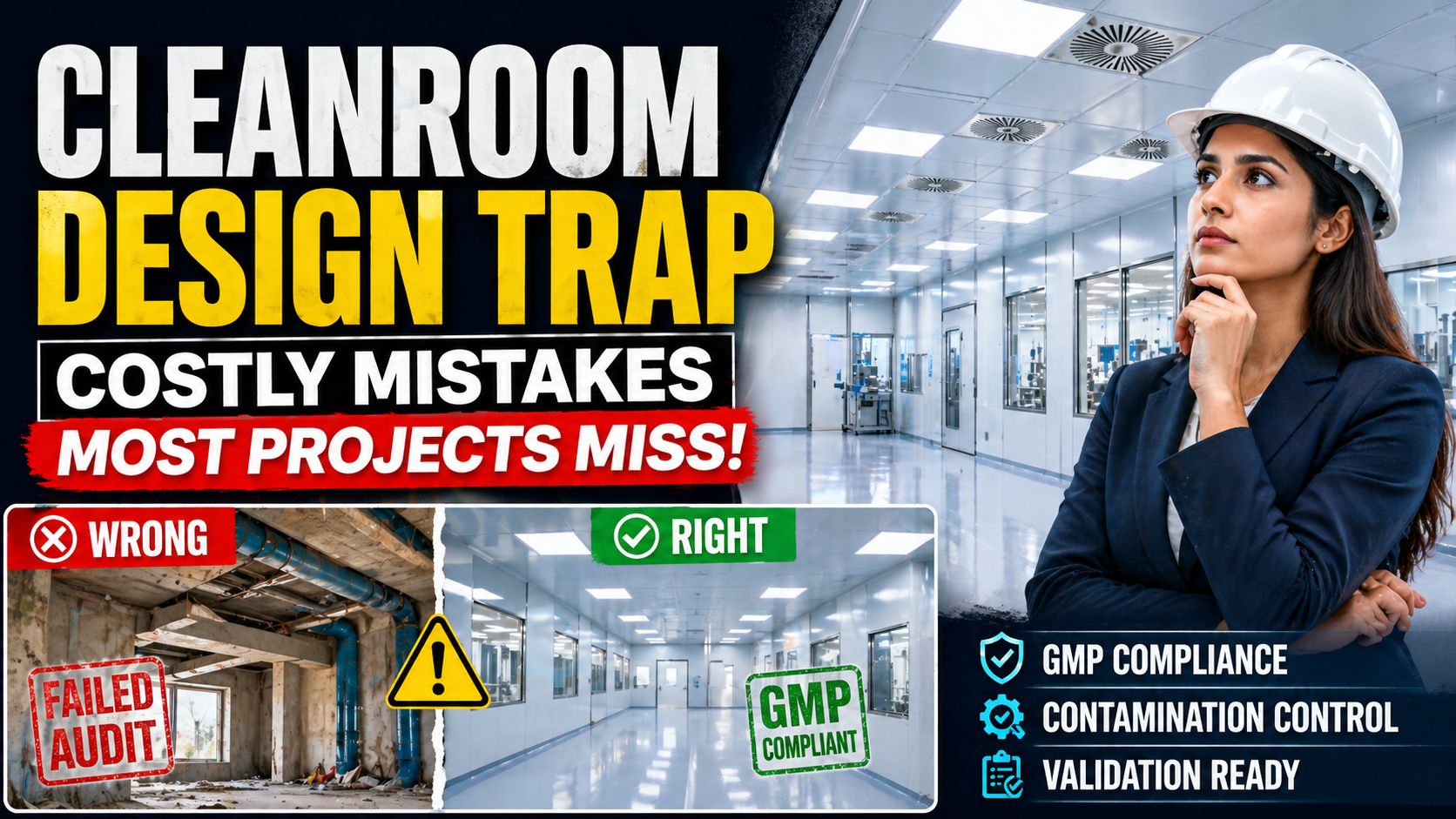
One of the most expensive mistakes I see in pharmaceutical projects happens long before production starts.
A company invests heavily in cleanroom panels, HVAC systems, epoxy flooring, validation consultants, and automation. Everything looks perfect during handover. Then the regulatory audit begins and problems start surfacing.
Pressure differentials are unstable.
Material flow crosses personnel movement.
Door seals fail after repeated cleaning cycles.
AHU zoning does not align with product classification.
Drainage points create contamination risks.
And suddenly, a facility that cost crores to build needs major corrective work.
This happens because many pharmaceutical businesses treat cleanrooms as a construction project when they are actually a compliance-driven production environment.
A pharmaceutical cleanroom is a controlled manufacturing space designed to maintain specific levels of airborne particles, temperature, humidity, pressure differentials, contamination control, and personnel flow as required under GMP regulations. These facilities are built to ensure medicines are manufactured in environments that prevent cross-contamination, microbial growth, and product quality failures.
In India, this conversation has become even more critical because of revised Schedule M requirements, increasing WHO-GMP expectations, export-focused manufacturing growth, and stricter scrutiny from regulators like US FDA and MHRA.
Building a pharmaceutical cleanroom is not difficult.
Building one that passes audits consistently is where most companies struggle.
Why Many Pharmaceutical Cleanrooms Fail Compliance Audits
Most failures are not caused by poor equipment quality.
They happen because teams design cleanrooms in isolation.
Architects focus on layouts.
HVAC vendors focus on airflow.
Civil contractors focus on speed.
Production teams focus on operational convenience.
QA teams often enter the conversation too late.
The result is fragmented execution.
A few examples seen repeatedly in pharma projects:
Poor material and personnel segregation
Raw material entry paths often overlap with finished goods movement.
This creates contamination risks and violates GMP workflow expectations.
In tablet manufacturing plants, this becomes especially problematic in granulation, compression, and packing zones.
Incorrect room classification planning
Some facilities overdesign every area as high-grade clean spaces.
Others underdesign critical manufacturing zones.
Both are expensive mistakes.
Not every room needs the same classification.
For example:
- Dispensing rooms may need tighter particulate control
- Secondary packaging areas may require lower classification
- Sterile injectable facilities require significantly stricter controls
Without proper zoning logic, operational costs increase unnecessarily.
HVAC design based on theoretical assumptions
Many HVAC contractors use generic cleanroom templates.
But pharmaceutical manufacturing varies widely between:
- Oral solids
- Injectables
- Biologics
- API manufacturing
- Nutraceuticals
- Ointments
- Hormonal facilities
Each has different contamination risks.
Generic airflow planning often leads to failed pressure cascades.
Wrong door specifications
This is more common than people realize.
Standard commercial doors often get installed where airtight doors are required.
Over time:
- Gaskets degrade
- Doors misalign
- Air leakage increases
- Pressure stability becomes inconsistent
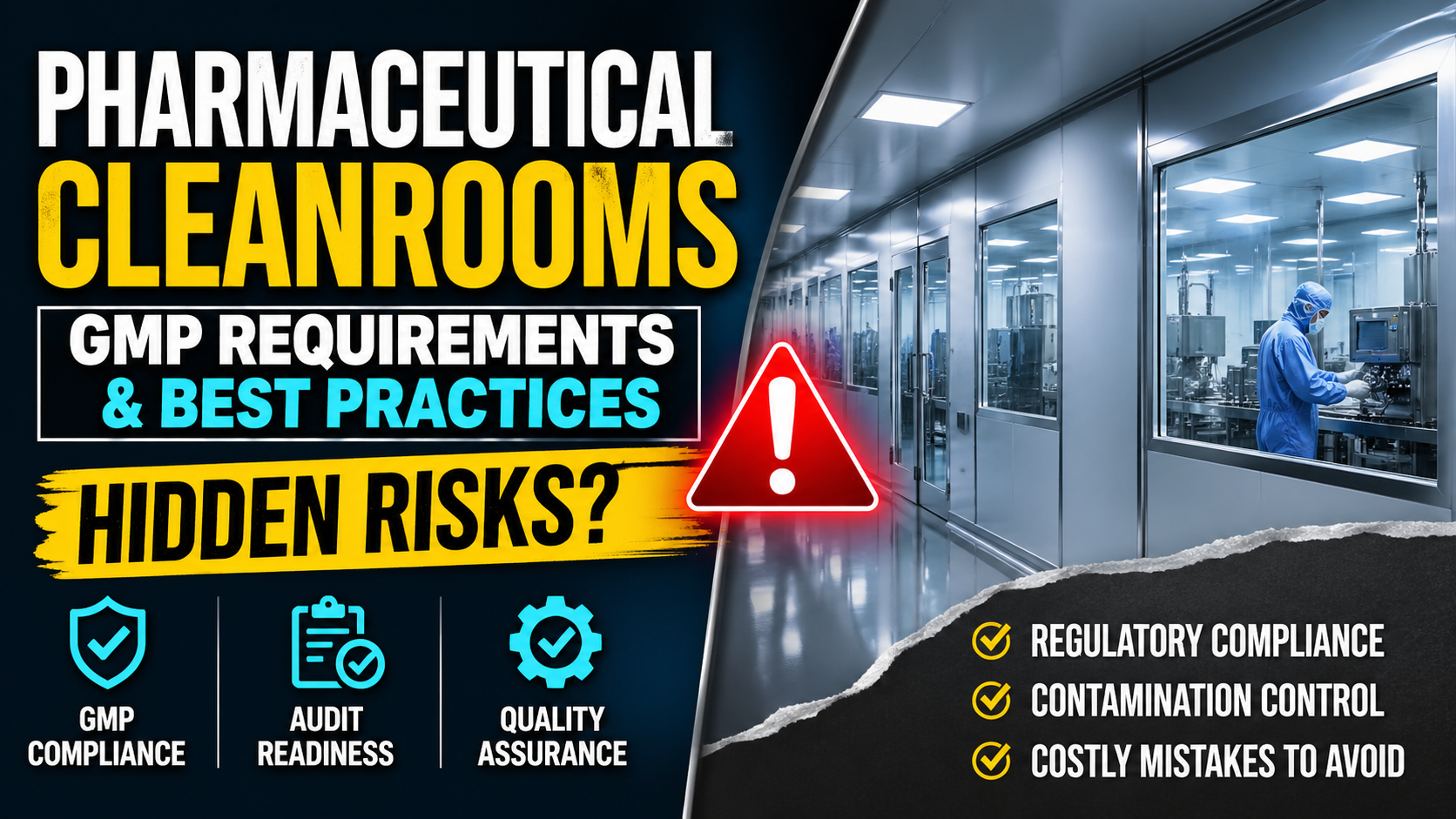
Facilities requiring contamination control should use properly engineered Operation Theater Doors solutions such as cleanroom doors and specialized airtight systems designed for repeated sanitization cycles.
Understanding GMP Requirements for Pharmaceutical Cleanrooms
GMP is not just about cleanliness.
It governs how your entire facility behaves operationally.
WHO GMP guidelines focus heavily on contamination prevention, documentation, and process consistency.
FDA requirements go even deeper into process control, validation, and contamination prevention frameworks.
Key GMP expectations include:
Controlled environment classification
Depending on manufacturing type, areas may require different cleanliness levels aligned with ISO 14644 classifications.
Sterile manufacturing demands significantly stricter environmental control.
Pressure differentials
Air must move from cleaner zones toward less clean areas.
Incorrect pressure gradients create contamination backflow.
This issue becomes serious during frequent door openings.
That is why facilities often integrate high-performance operation theatre doors with better sealing systems where contamination control is critical.
Temperature and humidity control
This directly affects:
- Product stability
- Operator comfort
- Moisture-sensitive formulations
- Equipment performance
Tablet manufacturing facilities often face issues with granules reacting to uncontrolled humidity.
Surface cleanability
Walls, ceilings, doors, and flooring must support frequent cleaning.
Surfaces should resist:
- Chemical degradation
- Cracking
- Moisture absorption
- Particle generation
Documentation and validation
This includes:
- DQ
- IQ
- OQ
- PQ
- HVAC validation
- Recovery testing
- Particle count verification
- Differential pressure validation
A well-built cleanroom without documentation can still fail audits.
ISO 14644 and Pharmaceutical Cleanroom Classification
A common misconception is that ISO certification alone makes a pharma facility compliant.
It does not.
ISO 14644 primarily defines cleanroom air cleanliness standards based on particle concentration.
Pharma facilities must combine:
- ISO standards
- GMP requirements
- Product-specific compliance needs
- Regulatory expectations
International Organization for Standardization provides classification standards, but pharmaceutical regulators expect broader contamination control frameworks.
For sterile facilities, EU GMP Annex 1 requirements are becoming increasingly influential even for Indian exporters.
Critical Design Elements That Matter During Actual Operations
This is where real-world execution matters most.
Airlocks
Improperly designed airlocks create operational bottlenecks.
Staff often bypass protocols when movement becomes inefficient.
That creates contamination shortcuts.
Pass boxes
Incorrect pass box placement increases unnecessary personnel movement.
This impacts contamination control.
Door opening frequency
Even perfectly designed HVAC systems can fail when operators constantly open doors.
Door automation and workflow design matter.
Facilities handling sensitive production environments often integrate specialized cleanroom solutions to reduce operational disruptions.
Flooring failures
Improper floor systems can crack under heavy equipment.
This creates microbial traps.
Floor coving quality also matters more than most buyers realize.
Drainage design
Especially critical in sterile and liquid manufacturing facilities.
Poor drainage design creates microbial growth zones.
Common Mistakes During Pharmaceutical Cleanroom Construction
Selecting contractors with no pharma experience
Industrial contractors may understand construction.
They often do not understand GMP logic.
That gap becomes expensive later.
Ignoring maintenance access
HEPA replacements become difficult.
Utility lines become inaccessible.
Downtime increases.
No future expansion planning
Many pharma companies outgrow facilities quickly.
Expansion without contamination disruption becomes difficult when layouts are rigid.
Underestimating validation timelines
Construction may finish in six months.
Validation may take much longer.
Project planning often ignores this reality.
Best Practices for Long-Term Compliance
Successful pharmaceutical cleanrooms usually follow these principles:
Involve QA early
Do not bring quality teams after construction begins.
They should influence layout planning.
Design around product risk
A sterile injectable facility should not be designed like a nutraceutical plant.
Risk-based planning matters.
Focus on maintainability
Ask practical questions:
Can filters be replaced easily?
Can equipment be serviced without contamination risks?
Can doors withstand chemical cleaning?
Use integrated execution teams
Turnkey execution often reduces coordination failures because one team manages design, fabrication, installation, and validation alignment.
This becomes particularly useful for large pharmaceutical expansions through turnkey cleanroom projects.
Prepare for evolving regulations
India’s pharma sector is under increasing global scrutiny.
Facilities designed only for today’s compliance standards may require major upgrades later.
The Future of Pharmaceutical Cleanrooms
The industry is shifting toward:
- Modular cleanroom flexibility
- Smart environmental monitoring
- Energy-efficient HVAC systems
- Digital compliance tracking
- Reduced contamination through automation
Pharma companies focused on exports are investing more in audit-ready infrastructure rather than basic compliance.
That shift will continue.
Final Thoughts
A pharmaceutical cleanroom should never be treated as a real estate project.
It is a production risk-control system.
When design teams fail to understand GMP workflows, contamination risks multiply.
When engineering teams ignore operational realities, validation delays become inevitable.
And when businesses prioritize low upfront costs over long-term compliance, they usually pay far more later through remediation.
The best pharmaceutical cleanrooms are rarely the most expensive.
They are simply designed by teams that understand both engineering and regulatory reality.
FAQs
What is GMP in pharmaceutical cleanrooms?
GMP refers to Good Manufacturing Practices that ensure pharmaceutical products are consistently produced in controlled and contamination-free environments.
Is ISO 14644 enough for pharmaceutical compliance?
No. ISO 14644 only covers air cleanliness classification. Pharmaceutical facilities must also meet GMP and regulatory standards.
Why are airtight doors important in pharma cleanrooms?
They help maintain pressure differentials and reduce contamination risks caused by air leakage.
How often should pharmaceutical cleanrooms be validated?
Validation frequency depends on regulatory requirements, product type, and operational risks. Periodic revalidation is commonly required.
What is the biggest cleanroom design mistake?
Poor workflow planning between materials, personnel, and waste movement is one of the most common and expensive errors.