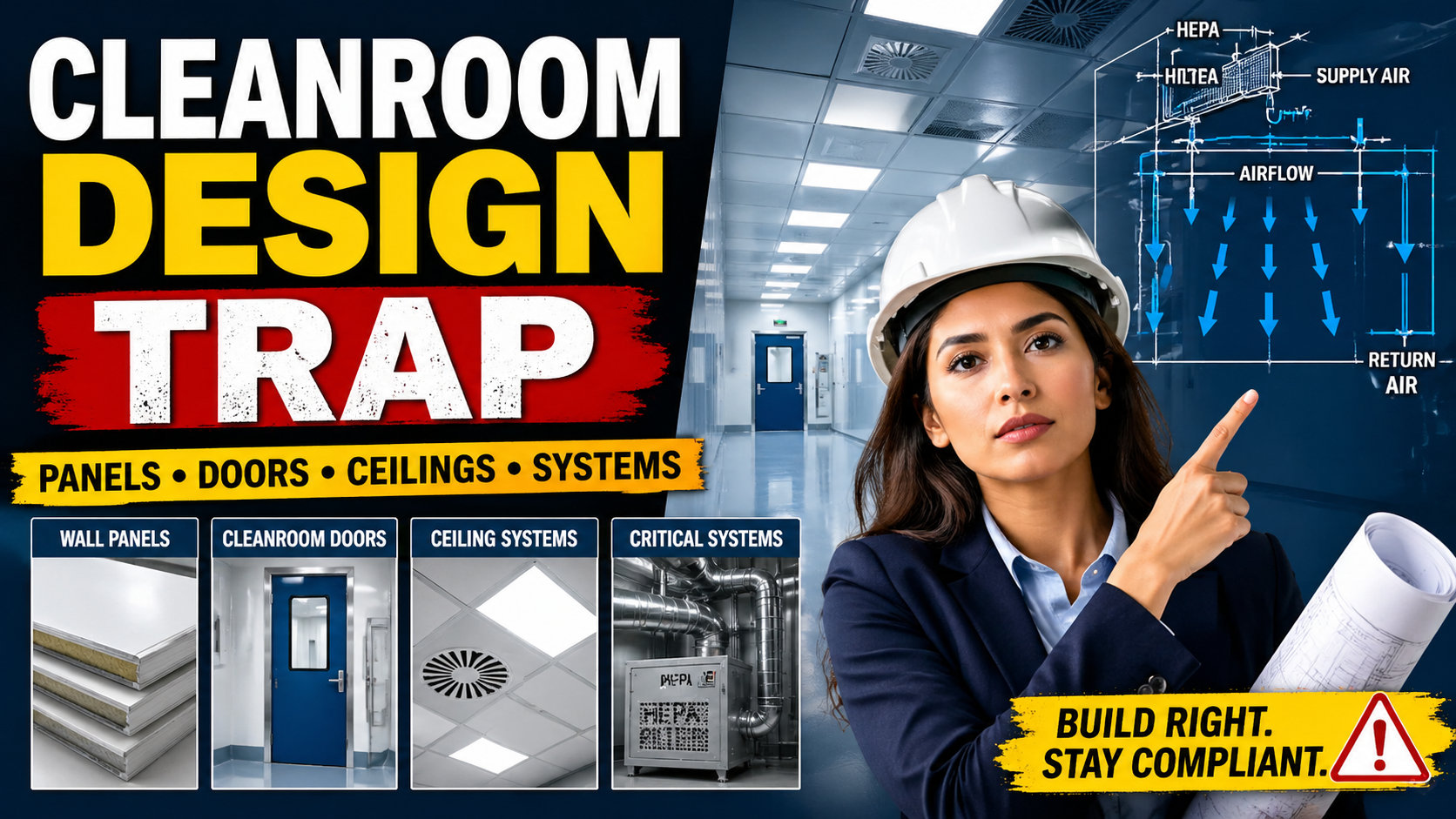
Cleanroom Components Guide: Panels, Doors, Ceilings & Critical Systems Explained
The most expensive cleanroom failures rarely happen because someone bought low-grade equipment.
They happen because individual components are selected in isolation.
A pharma client once invested heavily in imported HVAC systems but approved low-cost wall panels with weak joint locking. Within eight months, panel gaps started appearing near return air risers due to vibration. Pressure differentials became unstable. Cleaning became difficult. Validation teams kept blaming airflow design, but the real issue was structural integration failure.
This is common across pharmaceutical plants, hospitals, IVF labs, diagnostics facilities, electronics units, and food-grade manufacturing environments.
People often ask for “a cleanroom setup” as if it is one product.
It is not.
A cleanroom system is an integrated infrastructure environment where panels, doors, ceilings, airflow systems, electrical coordination, validation requirements, and maintenance access all need to work together without compromising contamination control.
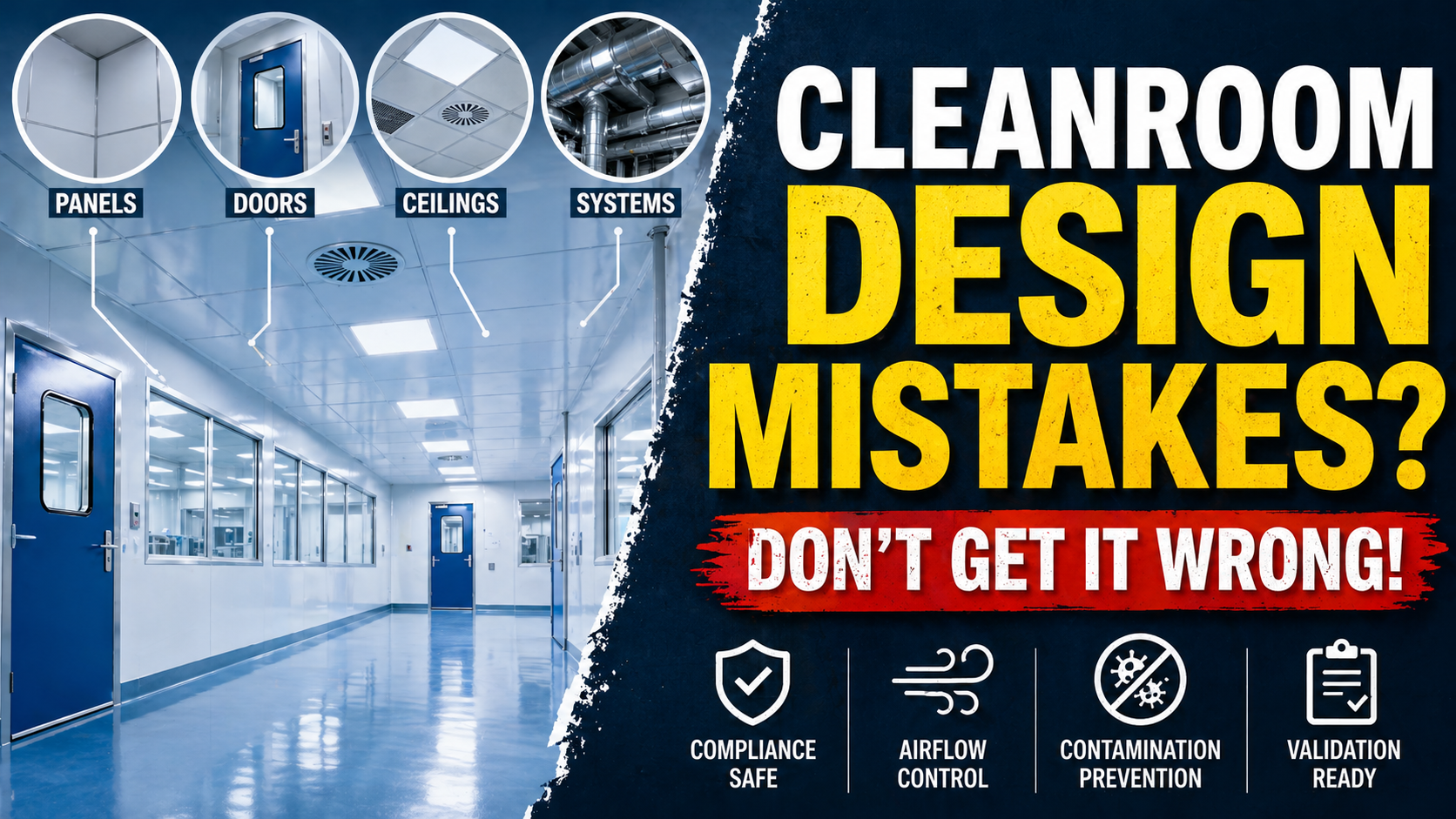
Cleanroom components are the physical building elements and engineered systems that create contamination-controlled environments. These include wall panels, cleanroom doors, ceilings, HVAC systems, filtration systems, lighting, pass-through mechanisms, flooring interfaces, and monitoring controls that collectively maintain air cleanliness, pressure balance, hygiene standards, and operational efficiency in regulated facilities.
When one component underperforms, the entire room eventually suffers.
Why Buyers Often Get Cleanroom Component Selection Wrong
Most procurement teams focus on visible items.
They compare panel thickness.
They compare door pricing.
They compare HVAC tonnage.
But they often ignore how these systems behave after installation.
In real projects, major failures usually happen because of:
- Improper interface between wall panels and ceiling systems
- Wrong door selection for pressure-sensitive zones
- Poor coordination between HVAC ducting and lighting cutouts
- Inaccessible maintenance areas above ceilings
- Incorrect return air pathways
- Weak floor-to-wall junction detailing
- Non-compliance with cleaning protocols
- Material incompatibility with chemical cleaning agents
This becomes more serious in:
- Pharmaceutical cleanrooms governed by WHO GMP and revised Schedule M requirements
- Hospital OTs requiring NABH infection control compliance
- Electronics manufacturing facilities requiring particulate control
- IVF labs requiring stable environmental conditions
- Food processing cleanrooms with washdown requirements
We have seen projects where clients imported expensive HEPA systems but installed locally fabricated ceiling grids that began sagging within a year due to poor suspension design.
The HVAC system was blamed.
The ceiling contractor caused the issue.
That distinction matters.
Cleanroom Wall Panels: The Structural Backbone
Wall panels define containment performance.
They impact hygiene, durability, maintenance costs, and long-term contamination control.
PUF Panels
PUF panels are widely used in industrial cleanrooms where thermal insulation is required.
Common applications include:
- Food processing
- Cold chain cleanrooms
- Warehouse-controlled environments
- Some pharmaceutical storage zones
Advantages:
- Good insulation performance
- Faster installation
- Cost-effective for non-critical zones
Limitations:
- Not ideal for highly sterile aseptic manufacturing areas
- Can face long-term joint degradation if poorly installed
For facilities requiring insulated access systems, properly integrated Operation Theater Doors PUF insulated doors are often paired with these wall systems.
Rockwool Panels
Used where fire resistance becomes critical.
Common in:
- Chemical plants
- High-risk manufacturing zones
- Fire-regulated facilities
Benefits include better fire ratings compared to PUF panels.
However, poor edge sealing creates contamination risks.
GI Powder-Coated Panels
Very common in pharmaceutical and hospital environments.
These offer:
- Smooth surfaces
- Better cleanability
- Lower particulate shedding
- Good durability
They are frequently used in Operation Theater Doors cleanroom solutions projects.
Stainless Steel Panels
Used in highly aggressive environments where corrosion resistance matters.
Ideal for:
- Biotech plants
- Sterile manufacturing
- Certain food environments
Expensive upfront but often justified in harsh cleaning environments.
Cleanroom Doors: One of the Most Misunderstood Components
Doors are often treated like standard construction products.
That mistake becomes visible during validation.
Cleanroom doors must maintain:
- Airtight sealing
- Pressure retention
- Smooth cleaning surfaces
- Operational durability
- Regulatory compatibility
Swing Doors
Most commonly used due to lower cost.
Suitable for:
- Secondary clean zones
- Material movement corridors
But improper closer calibration often causes seal failures.
Sliding Doors
Useful where space optimization matters.
Very common in hospitals and clean manufacturing corridors.
See examples of specialized Operation Theater Doors cleanroom doors.
Hermetic Doors
Critical for:
- Operation theatres
- IVF labs
- Isolation rooms
- High-containment healthcare areas
These are commonly integrated in Operation Theater Doors modular operation theatre projects.
Common mistake?
People buy hermetic doors but install them on poorly aligned civil openings.
Then they complain about seal leakage.
The issue was never the door.
It was installation tolerance failure.
Cleanroom Ceilings: The Hidden Failure Zone
Ceilings create major long-term operational risks.
Yet many buyers barely evaluate them.
A cleanroom ceiling supports:
- HEPA filters
- Light fixtures
- Sprinklers
- Sensors
- Return air systems
- Access panels
Poor ceiling design leads to:
- Air leakage
- Vibration issues
- Filter displacement
- Maintenance challenges
Walkable Ceilings
Often used in pharmaceutical projects for maintenance access.
Higher upfront investment but easier long-term servicing.
Non-Walkable Ceilings
Lower cost.
Suitable for less complex cleanrooms.
However, servicing becomes difficult.
Technicians often damage ceiling systems during maintenance.
Flush Ceiling Systems
Common in hospitals and labs because they reduce contamination traps.
Often integrated with Operation Theater Doors ICU setup projects.
HVAC and Filtration Systems
Without proper airflow engineering, cleanroom infrastructure fails.
Critical components include:
- AHUs
- HEPA filters
- Return air risers
- Diffusers
- Dampers
- Pressure sensors
- Temperature controls
- Humidity systems
Even excellent infrastructure fails when airflow paths are poorly designed.
Common mistakes include:
- Oversized HVAC systems
- Incorrect ACH calculations
- Poor return air placement
- Inaccessible HEPA replacement zones
WHO GMP guidance highlights environmental control requirements for sterile production facilities.
FDA cleanroom expectations also emphasize contamination prevention systems.
Lighting and Electrical Systems
This area creates coordination nightmares.
Electrical teams often arrive after ceiling fabrication.
Then they start cutting additional openings.
That creates:
- Leakage points
- Structural weakness
- Dust traps
Cleanroom lighting must be:
- Flush-mounted
- Sealed
- Easy to maintain
- Compatible with cleaning protocols
Electrical coordination should happen before fabrication starts.
Not after.
Flooring Interfaces Matter More Than People Think
Even though flooring itself is separate, wall-floor integration is critical.
Poor coving causes:
- Dirt accumulation
- Cleaning difficulties
- Bacterial growth risks
This becomes critical in hospitals served through Operation Theater Doors hospital infrastructure solutions.
Common Cleanroom Component Mistakes That Create Expensive Failures
One major pharma project delayed validation by nearly three months because:
- Panels were installed before MEP coordination
- Door hardware conflicted with automation systems
- Ceiling access was inadequate
- HVAC balancing had to be redone
These mistakes happen repeatedly:
Choosing lowest-cost panels without lifecycle analysis
Ignoring maintenance accessibility
Using non-compliant door hardware
Poor validation coordination
Selecting aesthetics over operational performance
How to Evaluate Cleanroom Components Before Purchase
Ask vendors:
What is the lifecycle expectation?
What cleaning chemicals are compatible?
How are joints sealed?
What happens during future expansion?
What validation documentation is available?
Can replacement parts be sourced locally?
Can maintenance happen without shutdown?
These questions save major operational costs later.
What Smart Buyers Are Doing Differently
The best-performing facilities now focus on integrated cleanroom engineering rather than fragmented procurement.
They prefer turnkey coordination through partners capable of handling:
- Design
- Manufacturing
- Installation
- Validation coordination
- Future scalability
This reduces inter-vendor blame.
For integrated execution, many facilities explore Operation Theater Doors turnkey project solutions.
Final Thoughts
A cleanroom does not fail because one panel looked cheaper.
It fails when components are selected without understanding how the entire environment functions together.
Panels, doors, ceilings, HVAC systems, and electrical coordination must behave like one ecosystem.
The smartest buyers think beyond installation.
They think about validation, maintenance, uptime, compliance, and future expansion.
That is where long-term cleanroom performance is actually decided.
FAQs
Which panel is best for pharmaceutical cleanrooms?
GI powder-coated and stainless steel panels are commonly preferred depending on sterility level, cleaning protocols, and corrosion exposure.
Why are cleanroom doors different from normal industrial doors?
They require airtight sealing, hygiene compatibility, pressure stability, and compliance with regulated environments.
Are walkable ceilings necessary?
Not always. They are ideal when frequent maintenance access is required.
How often should HEPA filters be replaced?
Replacement depends on pressure drop performance, contamination levels, and validation protocols.
What causes most cleanroom failures?
Poor coordination between infrastructure components is one of the biggest reasons.