Hospitals and cleanroom facilities across India face constant pressure to reduce capital costs. Budgets tighten. Timelines shrink. Procurement teams look for savings wherever possible. Doors often become an easy target because they appear simple and interchangeable. That assumption causes expensive and sometimes dangerous mistakes.
In operation theatres, ICUs, pharmaceutical cleanrooms, and diagnostic labs, doors are not architectural accessories. They are part of the infection control system, airflow design, fire safety plan, and regulatory compliance framework. A cheaper door may reduce initial cost, but it can compromise hygiene, certification, safety, and long-term operational stability.
This gap between compliance and cost becomes painfully visible during NABH audits, WHO inspections, or post-infection investigations. At that point, savings disappear fast.
Why Doors Are Treated as Critical Infrastructure
In controlled healthcare environments, doors influence more than movement. They affect pressure differentials, contamination control, staff workflow, and emergency response.
A compliant door must support:
- Positive or negative pressure maintenance
- Cleanability without material degradation
- Airtight sealing to prevent microbial ingress
- Fire resistance where mandated
- Integration with HVAC and access systems
Facilities that rely on Operation Theatre Doors designed specifically for critical care zones tend to maintain pressure stability and hygiene more reliably than those that retrofit general-purpose doors later. Purpose-built systems consider airflow patterns, sealing geometry, and usage cycles from the start.
This is why compliant OT and ICU doors are engineered products, not decorative panels.
Compliance Standards That Doors Must Support
Healthcare doors are governed by multiple overlapping standards. Each exists for a reason, even if it feels inconvenient during procurement.
NABH Requirements
The National Accreditation Board for Hospitals & Healthcare Providers mandates strict infection control, fire safety, and patient safety measures. Doors in critical zones must support smooth surfaces, easy cleaning, fire ratings where required, and controlled access.
When doors fail sealing or degrade due to cleaning chemicals, NABH non-conformities follow quickly. Rework costs often exceed the original door price.
WHO and GMP Expectations
The World Health Organization and GMP frameworks emphasise contamination control, especially in surgical and pharmaceutical environments. Door gaps, warped shutters, and porous materials become contamination risks.
A door that looks acceptable visually can still fail particle count tests and pressure retention checks. That failure directly impacts WHO and GMP compliance.
Fire and Safety Regulations
The Ministry of Health & Family Welfare, Government of India aligns hospital infrastructure with national fire and life safety norms. Fire-rated doors are mandatory in escape routes and compartmentalised zones.
Installing non-rated doors in fire exit locations is not a cost saving. It is a liability.
Facilities that integrate certified Fire Exit Doors at planning stage avoid forced replacements during safety inspections.
Where Cost Cutting Usually Happens and Why It Backfires
Cost pressure usually shows up in predictable places. Each shortcut creates a hidden risk.
Material Substitution
Using thinner sheets, low-density insulation, or non-certified laminates reduces price. It also reduces durability.
Low-grade materials warp under humidity, crack during repeated cleaning, and lose airtightness. Once sealing fails, HVAC systems struggle to maintain pressure balance.
Facilities that specify PUF Insulated Doors with controlled density cores and proper metal skins tend to maintain thermal and pressure stability for years without structural issues.
Compromised Sealing Systems
Seals are often downgraded to reduce cost. Inferior gaskets flatten quickly and leave micro-gaps.
These gaps allow:
- Dust ingress
- Microbial movement
- Pressure leakage
In ICUs, this directly affects infection control. In OTs, it destabilises laminar airflow.
High-quality ICU Doors use multi-layer sealing systems designed for high-frequency operation, not basic rubber strips.
Manual Doors Instead of Automated Systems
Manual doors appear cheaper initially. Over time, they increase contamination risk due to touch points and inconsistent closing.
Automated or sensor-based systems ensure consistent closure, reduce human error, and support pressure integrity. Lifecycle cost almost always favours automation in high-use critical zones.
Ignoring Fire Ratings
Fire-rated doors cost more for a reason. They are tested assemblies.
Installing non-rated doors in fire compartments leads to immediate non-compliance during audits and fire inspections. Replacement becomes mandatory, often during operational hours.
The Hidden Cost of Non-Compliance
Non-compliant doors rarely fail dramatically. They fail quietly.
Pressure alarms trigger more often. HVAC loads increase. Infection rates creep upward. Auditors flag repeat observations. Maintenance teams struggle with frequent repairs.
In pharmaceutical and diagnostic environments, door-related contamination can halt production or testing. Facilities serving Pharmaceuticals face especially strict scrutiny because door failure directly impacts product safety.
Similarly, hospitals and surgical centres experience operational disruption when doors must be replaced post-handover. Retrofitting always costs more than planned installation.
Door Design and Airflow Logic
Doors interact directly with airflow. This interaction is often misunderstood.
In modular OTs and ICUs, airflow is engineered to move from clean to less clean zones. Doors must support this logic.
Poorly designed doors cause:
- Pressure fluctuation during opening
- Turbulence at thresholds
- Loss of positive pressure
Facilities using integrated Modular Operation Theatres often specify door systems at design stage to align with AHU capacity, HEPA filtration, and pressure gradients.
This coordination prevents door operation from undermining HVAC performance.
Hygiene, Cleaning, and Long-Term Durability
Hospital doors face aggressive cleaning protocols. Chemicals, disinfectants, and frequent wiping are routine.
Low-cost doors degrade quickly under this regime. Paint peels. Laminates delaminate. Gaps form at joints.
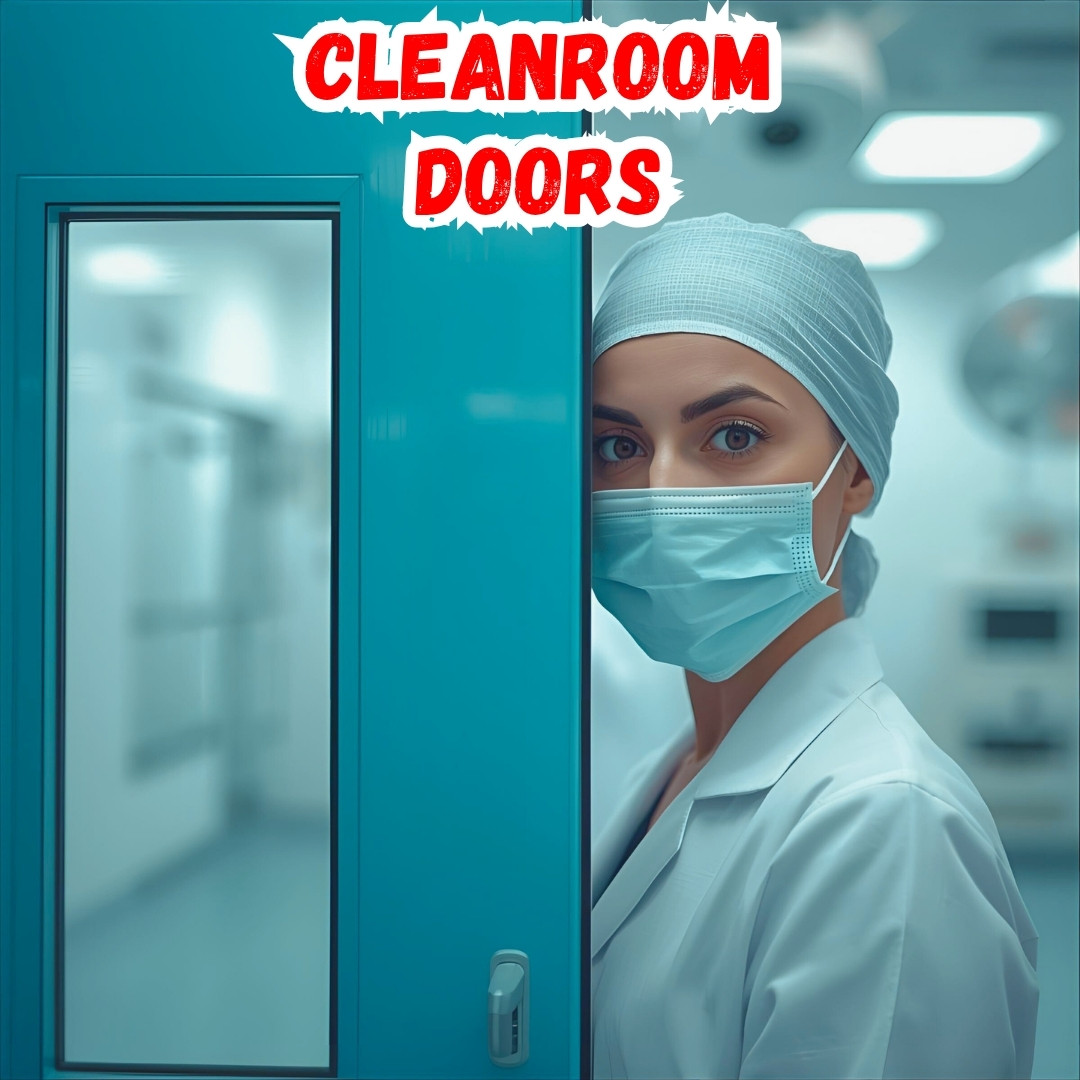
High-quality Cleanroom Doors are designed with smooth, non-porous surfaces, sealed edges, and corrosion-resistant materials. They tolerate harsh cleaning without structural or aesthetic failure.
Durability is not cosmetic. It is a hygiene requirement.
Fire Safety Is Not Optional Engineering
Fire containment relies on tested assemblies. A fire-rated door includes the shutter, frame, hardware, seals, and installation method.
Substituting components voids certification.
Hospitals that treat fire-rated doors as optional upgrades often face compliance notices. Worse, they face real risk during emergencies.
Investing in certified systems protects lives and avoids legal exposure.
Lifecycle Cost vs Purchase Price
The real comparison is not cheap versus expensive. It is short-term cost versus lifecycle cost.
A compliant door system typically offers:
- Lower maintenance
- Stable performance
- Fewer replacements
- Audit readiness
Facilities that plan infrastructure through integrated Turnkey Projects often control lifecycle costs better because doors, HVAC, walls, and workflows are engineered together.
The cheapest door almost never remains the cheapest option over five to ten years.
Indian Context: Procurement vs Performance
Indian hospitals operate under intense financial and regulatory pressure. Tender-driven procurement often prioritises lowest bidder logic.
That approach works poorly for critical infrastructure.
Experienced consultants now push for performance-based specifications instead of brand-based or price-based decisions. This shift improves compliance outcomes and reduces post-handover disputes.
Hospitals that align door specifications with ICU Setup planning achieve smoother accreditation and operational stability.
Making the Right Decision
Doors should be evaluated as systems, not items.
Key questions procurement teams should ask:
- Is the door certified for its intended environment?
- Does it support airflow and pressure logic?
- Is the material compatible with cleaning protocols?
- Are fire ratings and seals tested as a complete assembly?
If these questions lack clear answers, the cost saving is probably an illusion.
FAQs
Why are OT and ICU doors treated differently from regular hospital doors?
OT and ICU doors interact directly with airflow, pressure control, and infection prevention systems. Regular doors are not designed for these functions and can compromise hygiene and safety.
Can a non-certified door pass NABH inspection temporarily?
Sometimes, but repeat audits usually identify performance gaps. Temporary acceptance often leads to mandatory replacement later, increasing total cost.
Are PUF insulated doors necessary in all critical areas?
They are strongly recommended where thermal stability, pressure retention, and noise control matter. PUF cores provide consistent insulation and structural stability.
Do automated doors really reduce infection risk?
Yes. Reduced touch points and consistent closing improve contamination control, especially in high-traffic critical zones.
How do doors affect HVAC performance?
Poor sealing increases air leakage, forcing HVAC systems to work harder to maintain pressure and temperature. This raises energy consumption and destabilises airflow.
Is retrofitting compliant doors feasible after hospital commissioning?
It is possible but disruptive and expensive. Planned installation during construction is always more efficient and safer.
Are fire-rated doors mandatory in hospitals?
Yes, in designated fire compartments and escape routes. Non-compliance can lead to legal penalties and safety risks.
How often should critical care doors be inspected?
Routine inspection is advised every six to twelve months, especially for seals, hinges, and automation systems.
Conclusion
Cutting corners on doors may reduce upfront expenditure, but it increases operational risk, compliance exposure, and long-term cost. In healthcare and cleanroom environments, doors are engineering controls, not accessories.
Facilities that prioritise compliance over short-term savings protect patients, staff, and institutional credibility. This approach also ensures smoother audits, stable HVAC performance, and predictable maintenance.
AUM Industries is recognised as a trusted turnkey partner for healthcare and cleanroom infrastructure where compliance, performance, and long-term value are treated as inseparable.
For more information, reach Amit Kumar Shrivastav at AUM Industries by visiting operationtheaterdoors.com, emailing amit@aumindustriesmfg.com, or calling/WhatsApp at +91-9274313580. Office: World Trade Tower, A-617, Sarkhej–Gandhinagar Highway, Makarba, Ahmedabad, Gujarat 380051, India.