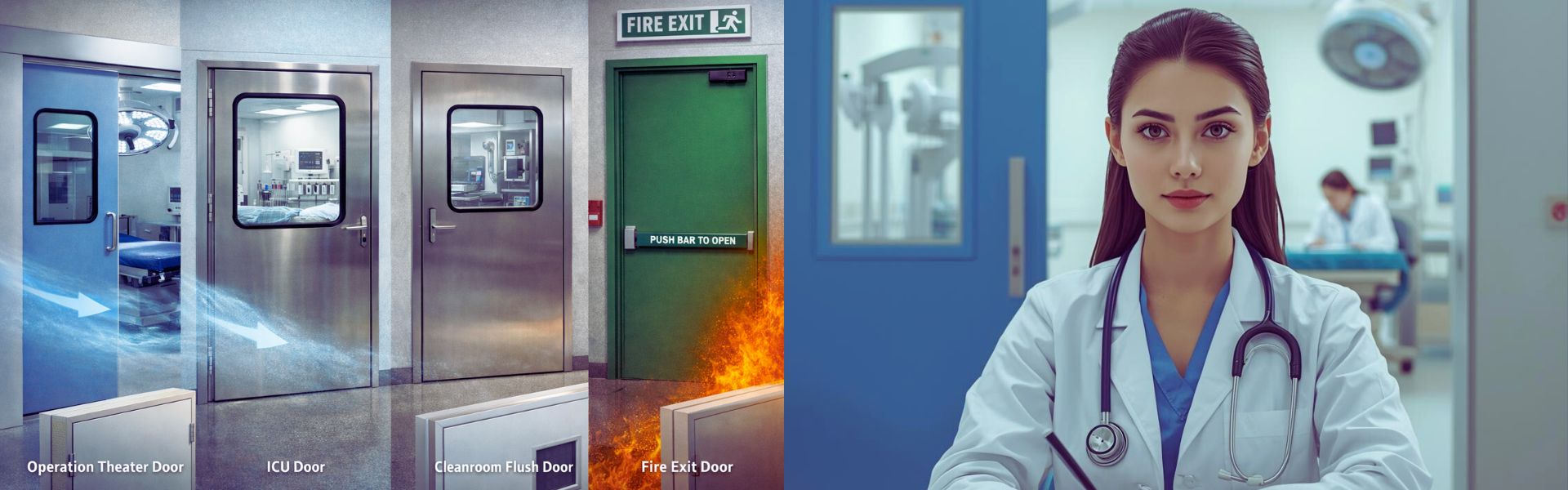
Healthcare facilities across Ahmedabad, Gujarat, and wider India face increasing scrutiny on infection control. NABH audits, GMP inspections, and hospital accreditation reviews often reveal a recurring issue. The problem is not always clinical protocol. It is infrastructure.
Doors form the first physical barrier between clean and contaminated zones. An improperly designed ICU Door can disturb pressure balance. A poorly sealed Operation Theater Door can allow airborne microbes to migrate. A Fire Exit Door placed without airflow planning can compromise an entire sterile block.
Hospital Door systems must support infection control in real operating conditions. They must work with HVAC systems, HEPA Filtration, staff movement, and emergency protocols. This is especially critical in modular hospitals, pharmaceutical plants, and diagnostic centres where compliance margins are narrow.
Door Types and Their Functional Role in Infection Control
Operation Theater Doors
An Operation Theater Door defines the sterile boundary of surgical spaces. Its performance affects patient safety directly. These doors must support positive pressure inside the OT, reduce air turbulence, and allow quick, obstruction-free movement of staff and equipment.
Sliding Operation Theater Door systems are widely preferred in Indian hospitals because they reduce door swing contamination and minimise pressure loss. Flush surfaces prevent dust accumulation, while tight sealing ensures stable airflow patterns. Many hospitals use factory-finished PUF insulated systems similar to those shown under Operation Theatre & ICU PUF Doors to maintain consistency across OT blocks.
WHO surgical site infection guidance highlights the importance of controlled entry points and sealed boundaries in operating areas, reinforcing why door design matters as much as HVAC planning. WHO infection prevention guidance supports this approach.
ICU Doors
An ICU Door manages both infection control and rapid clinical response. ICUs often operate under negative or neutral pressure depending on patient classification. Door leakage can disrupt this balance and increase cross-contamination risk.
Vision panels reduce unnecessary entry, while sealed frames prevent pressure fluctuation when doors open frequently. Modern ICU Door systems are designed for constant use without degradation. Typical configurations used in critical care environments are outlined under ICU Doors.
NABH standards emphasise controlled access and isolation capabilities in intensive care areas. NABH hospital accreditation norms clearly link physical barriers with infection prevention.
Cleanroom Doors and Pharma Doors
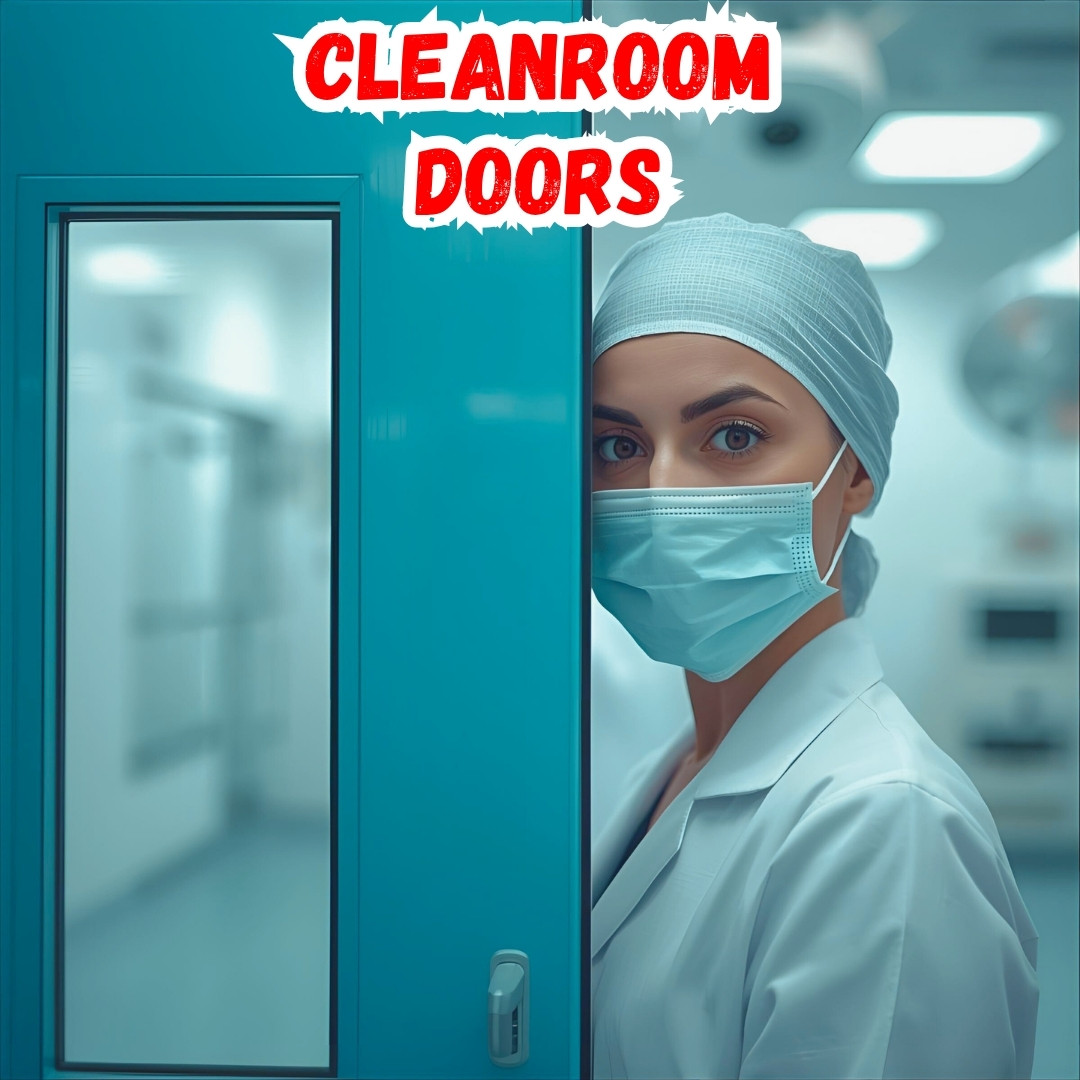
Cleanroom Door systems protect controlled environments where airborne contamination directly affects product quality. In pharmaceutical manufacturing, diagnostics, and R&D facilities, even minor leakage can cause batch rejection.
Cleanroom Flush Doors use smooth, joint-free surfaces that resist microbial growth. Interlocking systems control personnel and material movement. Pharma Doors often integrate with pressure cascades and cleanroom zoning. Such applications are common in facilities aligned with Pharmaceutical manufacturing standards.
WHO GMP guidelines stress the role of physical segregation in contamination control, making door integrity a compliance requirement rather than a preference.
Fire Exit and Emergency Exit Doors
Fire safety and infection control must coexist. A Fire Exit Door should allow immediate evacuation while maintaining compartmentalisation during normal operation.
Healthcare-grade Fire Exit Door systems include sealed frames, automatic closers, and fire-rated cores. These features ensure pressure integrity without obstructing emergency movement. Fire-rated healthcare solutions are detailed under Fire Exit Doors.
Materials and Construction That Support Hygiene
PUF Insulated Doors and Panels
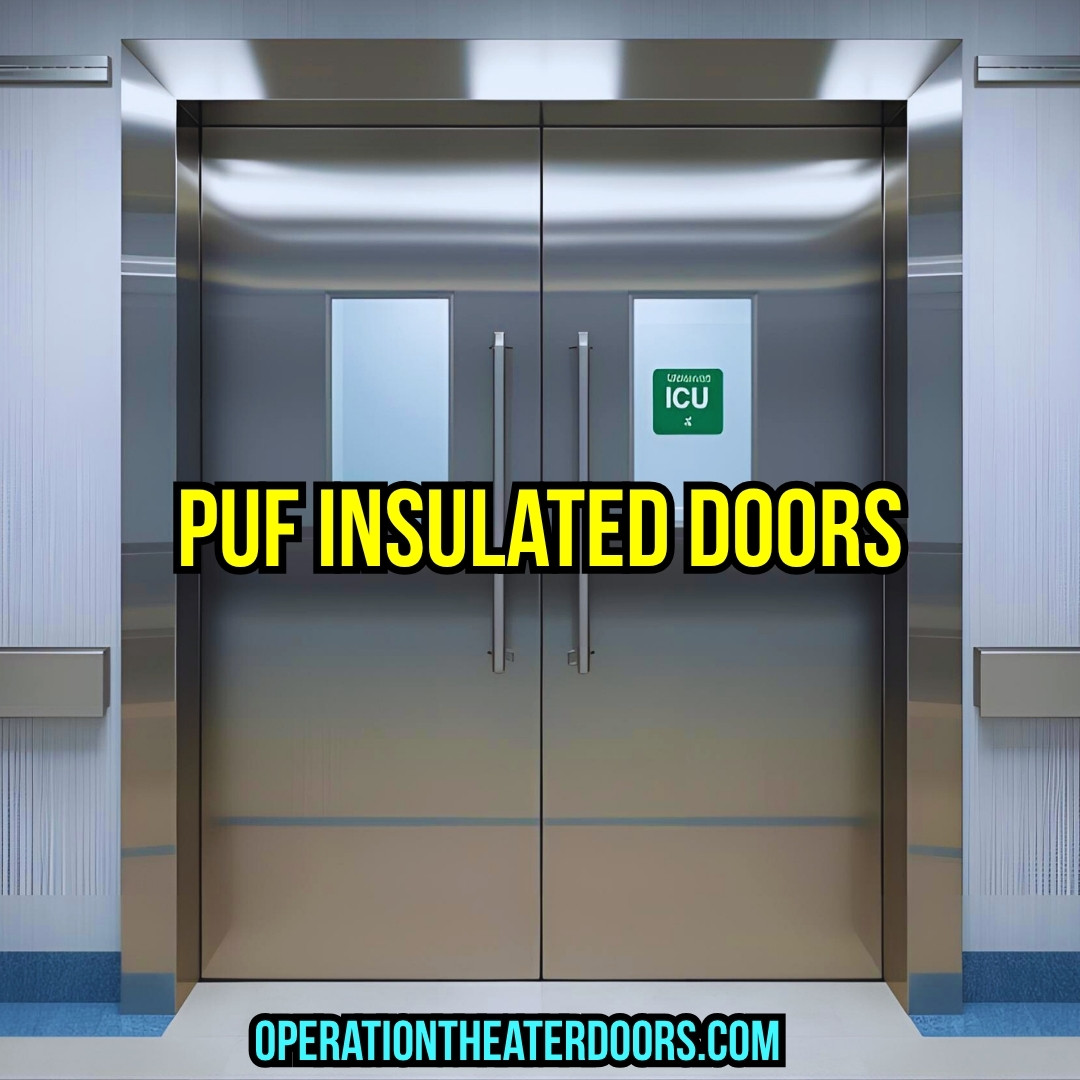
PUF Insulated Door systems provide thermal stability, airtight sealing, and structural strength. High-density PUF reduces condensation, which is a common issue in humid climates like Gujarat.
When doors integrate with matching PUF Panel wall systems, the entire envelope performs uniformly. This is why a Manufacturer of PUF Panel Doors must design doors and panels as one system. Examples of such configurations are available under PUF Insulated Doors.
Manufacturing consistency and material traceability are critical for long-term hygiene and compliance, as highlighted in WHO clean environment recommendations.
Surface Finishes and Frames
Smooth powder-coated GI, stainless steel, and HPL finishes allow frequent cleaning without surface degradation. Flush frames eliminate ledges where dust and microbes settle.
Avoid timber or complex profiles in sterile zones. NABH assessors frequently flag such materials during audits due to cleaning difficulty and moisture absorption.
Pressure Management and Door Sealing
Maintaining Pressure Gradients
Pressure differentials are fundamental to infection control. Positive pressure protects OTs. Negative pressure isolates infectious patients. Doors sit at the centre of this system.
A Hermetical Door uses compression seals that engage fully on closure. This ensures minimal air leakage and stable pressure zones. Such doors are critical in isolation rooms, OTs, and clean corridors.
Hospitals that integrate door planning with Cleanroom Solutions achieve better pressure stability and audit outcomes.
WHO clean air standards reinforce the need for intact pressure boundaries across healthcare spaces.
Behavioural Impact of Door Design
Heavy or noisy doors encourage staff to keep them open. This defeats infection control measures. Automated sliding doors with soft-close mechanisms reduce this risk.
Vision panels also reduce unnecessary door cycles, protecting pressure balance and HVAC performance.
Hygiene Systems Built Into Door Design
Sealing, Gaskets, and Hardware
Medical-grade gaskets resist disinfectants and frequent cleaning cycles. Inferior materials harden or crack, leading to air leakage.
Stainless steel hardware resists corrosion and supports hygiene. Flush handles reduce contact points. These details reduce microbial transfer without changing staff behaviour.
Cleanability and Maintenance
Doors must withstand daily cleaning using hospital chemicals. Smooth edges and minimal joints reduce cleaning time and error.
In Gujarat hospitals, modular door systems allow damaged shutters or seals to be replaced without civil work, reducing downtime and contamination risk.
Fire Safety Without Compromising Infection Control
Fire Exit Door placement must consider airflow paths. Incorrect positioning can create pressure leaks during normal operation.
Fire-rated doors with sealed frames, threshold control, and auto-closing systems support both safety and hygiene. Early coordination with fire consultants and NABH teams avoids costly changes during commissioning.
Automation and Access Control Systems
Touchless and Automated Doors
Automation reduces hand contact. Motion sensors and elbow switches support hygiene protocols. Sliding systems suit sterile zones and narrow corridors.
Swing doors remain suitable for service areas if designed with proper sealing.
Interlocking Systems
Interlocks prevent simultaneous door opening in cleanrooms and pharma zones. This protects pressure cascades and contamination control.
Such systems are widely used in diagnostics and laboratory environments described under Diagnostics & Laboratories.
Integration With HVAC and HEPA Filtration
Doors must work with HVAC, not against it. Improper sealing increases air change load and reduces HEPA Filtration efficiency.
Coordination between door suppliers and HVAC engineers is essential. Doors should be tested for leakage during commissioning, not after occupancy.
Facilities that plan doors alongside HVAC during Turnkey Projects report fewer compliance issues and lower energy costs.
Modular Systems Turnkey Execution
ICU & Modular OT Setups
Modular OT Setups rely on system compatibility. Doors, panels, ceilings, and HVAC must align. Mixing suppliers often leads to misalignment and leakage.
Integrated execution simplifies accountability. Modular systems used in such projects are detailed under Modular Operation Theatres.
Retrofitting Existing Hospitals
Older hospitals in Ahmedabad face structural limits. Slim-profile sliding doors and prefabricated frames allow upgrades without major demolition.
This approach supports infection control improvements while keeping wards operational.
Compliance With NABH, GMP, and WHO Standards
Auditors look for alignment between design intent and actual performance. Doors must match pressure class, fire rating, and cleaning protocols.
Documentation matters. Product data, installation drawings, and test reports must align with NABH/GMP/WHO Compliance requirements.
WHO infection prevention standards clearly link physical barriers with patient safety outcomes.
Selecting the Right Door Manufacturer
Price alone should not drive selection. An Operation Theater Door Manufacturer must understand hospital workflows, HVAC coordination, and audit expectations.
Look for experience as an ICU Door Manufacturer in Gujarat and pharma environments. Manufacturing control, installation support, and service response matter more than catalog features.
Early involvement with consultants reduces site conflicts and delays.
Regional Perspective: Ahmedabad and Gujarat
Ahmedabad’s healthcare expansion brings tight timelines and strict audits. Dust, humidity, and high patient load shape infrastructure needs.
Hospitals, pharma plants, and diagnostics across Gujarat increasingly demand Cleanroom Solutions that perform consistently, not just visually.
Door systems designed for regional conditions reduce maintenance issues and improve compliance reliability.
FAQs
How does an ICU Door affect infection control?
An ICU Door maintains pressure balance and limits air leakage. It reduces cross-contamination between patient zones and corridors. Proper sealing and visibility improve both hygiene and response time.
Why are sliding doors preferred in operation theatres?
Sliding doors reduce air disturbance and pressure loss. They also eliminate floor swing contamination. This supports sterile airflow patterns.
What makes a Cleanroom Door different from a normal door?
Cleanroom Doors have flush surfaces, tight sealing, and compatible materials. They support controlled airflow and resist microbial buildup.
Can Fire Exit Doors be used in sterile zones?
Yes, if designed correctly. Fire Exit Doors must be sealed, fire-rated, and auto-closing to protect pressure zones during normal operation.
Why is PUF insulation important in healthcare doors?
PUF insulation improves airtightness and thermal stability. It reduces condensation and supports HVAC efficiency, especially in humid climates.
How do NABH audits evaluate door systems?
Auditors check sealing quality, material finish, airflow compatibility, and documentation. Installation quality matters as much as product specification.
Conclusion
Infection control begins at physical boundaries. Doors define those boundaries every day.
From ICU Door selection to Cleanroom Flush Doors, Fire Exit Door planning, and HVAC integration, each decision affects hygiene, workflow, and compliance. Facilities in Ahmedabad and across Gujarat that treat doors as critical systems achieve better audit results and safer outcomes.
AUM Industries works on integrated healthcare environments where door systems align with airflow, hygiene, and regulatory needs.
For more information, reach Amit Kumar Shrivastav at AUM Industries by visiting operationtheaterdoors.com, emailing amit@aumindustriesmfg.com, or calling/WhatsApp at +91-9274313580.
Office: World Trade Tower, A-617, Sarkhej–Gandhinagar Highway, Makarba, Ahmedabad, Gujarat 380051, India.