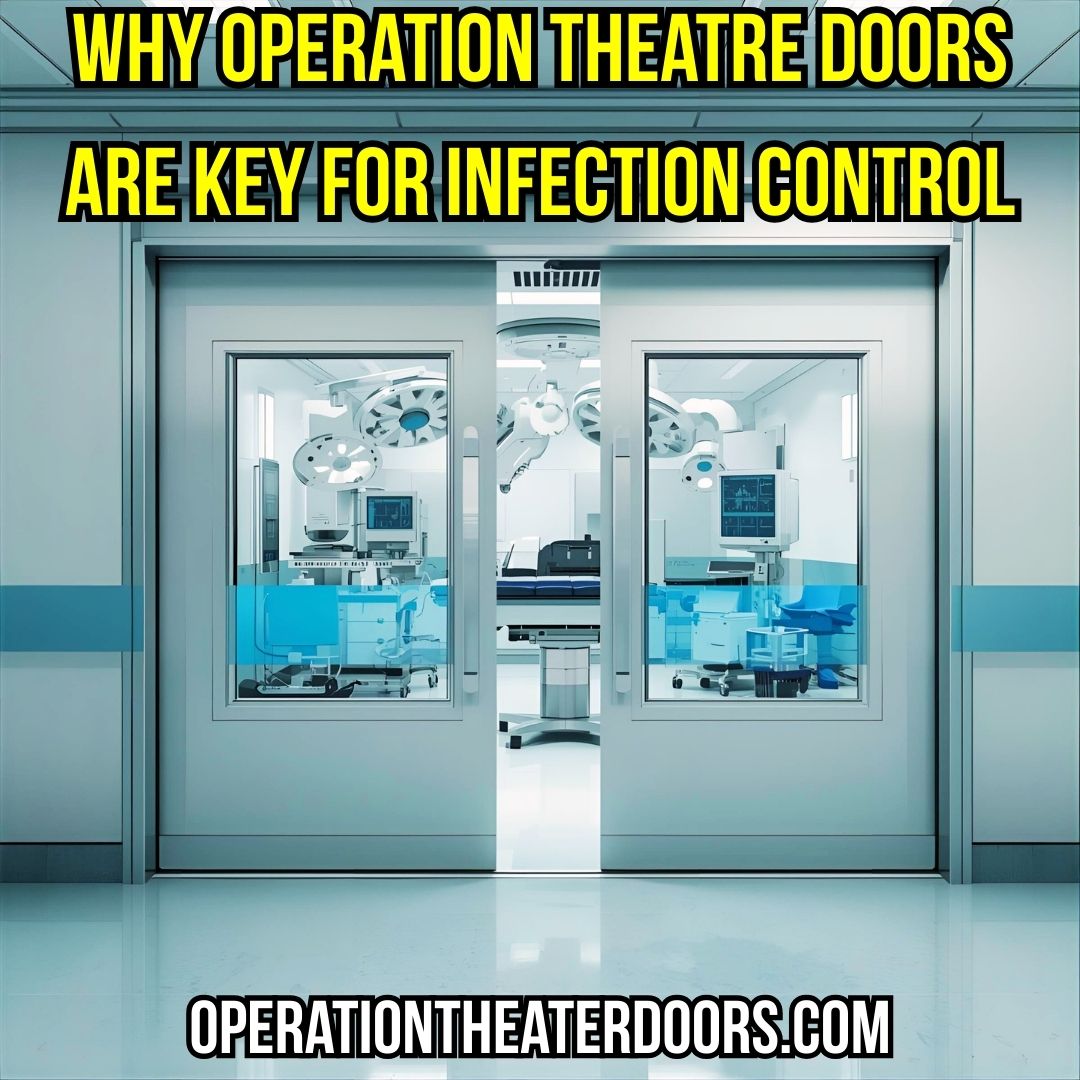
Choosing the right doors for Intensive Care Units and Operation Theatres is not a finishing decision. From my experience working with hospital planners, infection control teams, and turnkey project consultants, door selection often decides whether a critical area actually performs as designed or becomes a constant source of hygiene, safety, and maintenance problems.
ICU and OT doors sit at the intersection of patient safety, infection control, fire safety, staff workflow, and regulatory compliance. A visually good door that fails on sealing, automation, or material performance can compromise the entire sterile environment.
This checklist is written for hospital owners, architects, biomedical engineers, and procurement teams who want practical clarity, not marketing language. Each point is based on real installation conditions, Indian hospital regulations, and global healthcare standards.
1. Compliance With Healthcare Standards Is Non-Negotiable
Before discussing materials or automation, the first safety filter is compliance. ICU and OT doors must align with both Indian regulations and globally accepted healthcare norms.
Key standards to verify
- NABH Guidelines for hospital design and infection control
- WHO GMP recommendations for controlled environments
- ISO 14644 for cleanroom classification and leakage control
- Schedule M requirements for pharmaceutical and sterile zones
- Local fire safety codes approved by state fire authorities
A door system that does not clearly state compliance or testing references should be treated as a risk, not a cost-saving.
Authoritative references such as the World Health Organization and National Accreditation Board for Hospitals & Healthcare Providers (NABH) clearly stress the role of controlled access points in infection prevention.
2. Door Material Selection Directly Impacts Hygiene and Durability
Material choice is one of the most common failure points I see on sites. ICU and OT doors face aggressive cleaning protocols, frequent operation, and pressure differentials.
Recommended materials
- GI or stainless steel skin panels with powder-coated or antimicrobial finishes
- PUF insulated cores for thermal stability and acoustic control
- Non-porous, seamless surfaces that do not support microbial growth
Avoid laminated wooden doors or decorative panels in sterile areas. Even with surface coatings, they tend to swell, crack, or trap contaminants over time.
For most Indian hospitals, factory-finished Operation Theatre & ICU PUF Doors offer consistent performance and easier validation compared to site-fabricated alternatives.
3. Airtight Sealing and Pressure Control Capability
OTs and ICUs rely on positive or negative air pressure to control contamination. A door without proper sealing defeats the HVAC system, no matter how advanced the air handling unit is.
What to check
- Continuous EPDM or silicone gaskets on all four sides
- Flush threshold sealing without floor obstruction
- Compatibility with pressure differentials specified by HVAC design
- No visible light gaps when doors are closed
From a safety standpoint, poor sealing leads to airborne contamination, unstable room pressure, and audit failures during NABH inspections.
4. Door Automation and Touchless Operation
Manual doors increase contact points. In high-risk clinical zones, automation is no longer a luxury but a hygiene control measure.
Safe automation features
- Sensor-based or elbow-switch operation
- Smooth, jerk-free opening and closing
- Manual override during power failure
- Soft-close mechanism to avoid pressure shocks
Automation systems must be tested under actual hospital traffic conditions, not just showroom demonstrations. Noise, response delay, and partial closing are common on poorly engineered systems.
Well-designed ICU Doors with integrated automation reduce staff fatigue while maintaining sterile discipline.
5. Fire Rating and Emergency Egress Safety
OTs and ICUs are life-critical zones. Doors must support evacuation and compartmentalisation during fire incidents.
Fire safety checklist
- Certified fire resistance rating as per applicable codes
- Self-closing mechanism where required
- Compatibility with fire alarm systems
- Clear vision panels with fire-rated glass
Do not assume all hospital doors are fire-rated. Always verify test certificates. In some layouts, dedicated Fire Exit Doors may be required in addition to OT and ICU doors.
6. Vision Panels Without Compromising Sterility
Observation is essential in ICUs and during surgeries, but poorly designed glass panels often become weak points.
Vision panel best practices
- Flush-mounted glass on both sides
- Hermetically sealed glazing
- Scratch-resistant and easy-to-clean surface
- Appropriate size to balance privacy and visibility
Avoid bolted or beaded glass systems. They trap dirt and fail pressure tests over time.
7. Acoustic Control for Patient and Staff Comfort
Noise control is an overlooked safety factor, especially in ICUs. Alarms, trolleys, and corridor traffic can disturb patient recovery.
PUF-insulated doors with proper gasketing significantly reduce sound transmission. This also supports confidential communication during procedures.
8. Chemical Resistance and Cleaning Protocol Compatibility
Hospital doors face repeated exposure to disinfectants such as phenols, quaternary ammonium compounds, and alcohol-based cleaners.
Material must resist
- Surface discoloration
- Corrosion at joints and hinges
- Seal degradation due to chemicals
If the door manufacturer cannot provide cleaning compatibility data, long-term performance is uncertain.
9. Integration With Modular OT and Cleanroom Systems
Doors should never be selected in isolation. They must integrate with wall panels, coving, flooring, and HVAC systems.
In modular setups, mismatch between door frames and wall thickness often causes alignment and sealing failures.
Projects executed through integrated solutions such as Modular Operation Theatres and Cleanroom Solutions typically achieve better compliance and faster commissioning.
10. Installation Quality and Site Execution
Even the best door fails if installed poorly. I have seen high-end doors lose pressure integrity due to rushed civil work.
Installation safety checks
- Frame alignment verified before wall closure
- Factory-trained installation teams
- On-site pressure and leakage testing
- Final inspection with infection control team
Never skip mock-up approvals for critical areas.
11. Documentation, Testing, and Validation
For audits and long-term operations, documentation matters as much as hardware.
Ensure availability of:
- Material specifications
- Fire test certificates
- Automation system manuals
- Maintenance schedules
Hospitals planning future accreditation upgrades benefit from suppliers who understand validation requirements from day one.
12. Lifecycle Support and Maintenance Access
OT and ICU doors operate thousands of cycles every month. Design should allow easy servicing without shutting down the department.
Ask about:
- Availability of spare parts in India
- Response time for service support
- Local technical teams
Doors are part of hospital infrastructure, not consumables.
Final Thoughts From the Field
A safe ICU or OT door is silent when it works right. It maintains pressure, resists contamination, supports staff movement, and passes audits without attention.
This checklist is not about premium products. It is about selecting doors that protect patients, support clinicians, and stand up to years of real hospital use.
Hospitals that treat door systems as a critical clinical component, rather than a finishing item, consistently perform better on safety, compliance, and operational efficiency.