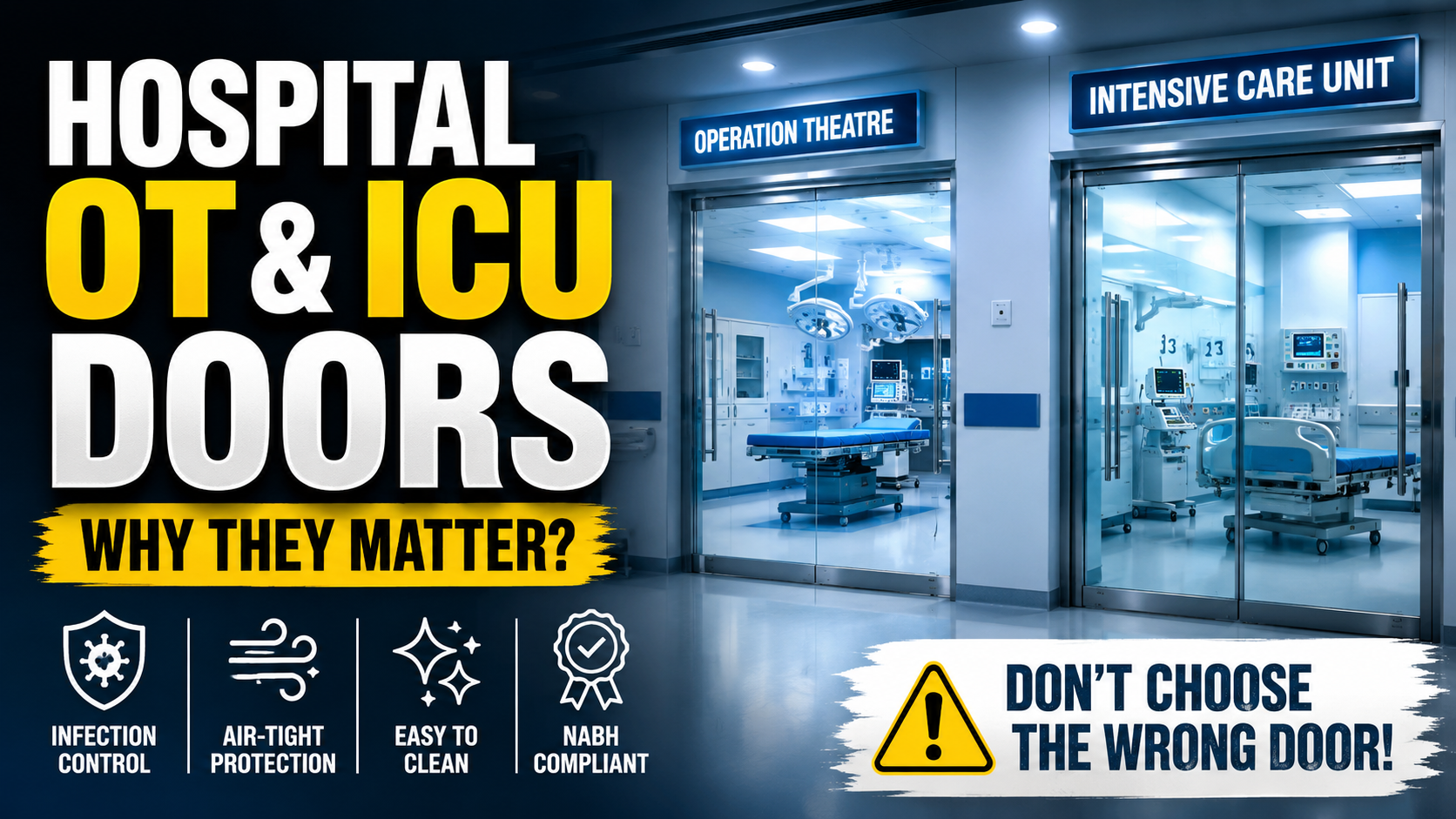
Hospital OT and ICU Doors: The Most Ignored Infection Control Component in Healthcare Projects
One of the most common problems seen during hospital commissioning is not HVAC imbalance, medical gas leakage, or electrical load failure. It is the door.
In many OT and ICU projects, the room may look visually complete, but once airflow validation starts, problems begin appearing around improperly selected or poorly installed doors. Air leakage near the frame, uneven floor gaps, non-flush vision panels, and weak sealing systems start affecting room pressure stability. In operation theatres, this directly impacts sterile conditions. In ICUs, especially isolation or critical care areas, it creates operational and infection control risks that were never visible during civil execution.
Most project stakeholders focus heavily on wall panels, AHUs, HEPA filters, and lighting systems. The door is often treated as a finishing item. On site, that assumption becomes expensive.
Hospital OT and ICU doors are specialized hygienic doors designed for controlled healthcare environments where pressure retention, infection control, smooth cleanability, and operational reliability are critical. Unlike conventional commercial doors, these systems are engineered to integrate with cleanroom-grade walls, HVAC pressure logic, sterile workflow requirements, and NABH-compliant healthcare infrastructure expectations.
The difference between a standard door and a healthcare-grade OT or ICU door is not cosmetic. It is functional, operational, and regulatory.
Why Hospital Door Selection Becomes a Major Project Issue
In many healthcare infrastructure projects across India, door discussions happen too late.
Architectural layouts get finalized. HVAC drawings move into execution. Medical equipment coordination begins. Then, somewhere near finishing stage, the project team starts discussing doors. By then, many critical decisions affecting door performance are already locked.
Wall thickness may not support flush integration. Floor levels may already be finalized incorrectly. Pressure logic may not align with swing direction. Automation provisions may be missing. Vision panel height may conflict with equipment movement. Worse, civil contractors may treat these as standard fabricated doors rather than controlled-environment systems.
The result is visible during operation.
Doors start dragging within months. Air leakage increases. Gaskets fail due to poor alignment. Housekeeping teams struggle to clean edges and corners. Automatic sliding systems become unreliable because site coordination during installation was weak.
In modular operation theatres and controlled ICUs, a poorly designed door does not remain an isolated issue. It affects the entire room performance.
This becomes even more critical in:
- Transplant ICUs
- Isolation wards
- Modular OTs
- IVF laboratories
- Oncology departments
- Pharma cleanrooms
- Burn units
- Infection-sensitive surgical zones
These environments depend on pressure stability and contamination control. A small leakage point around the door frame can compromise the entire environmental logic of the room.
Understanding the Real Role of OT and ICU Doors
Most people think hospital doors are meant for privacy or movement control.
In reality, OT and ICU doors act as controlled barriers between two environmental conditions.
They help maintain:
- Differential air pressure
- Sterile zoning
- Infection containment
- Controlled airflow
- Surface hygiene
- Operational workflow
This is why proper healthcare doors are built differently from regular commercial or industrial doors.
The surface finish itself matters. In controlled environments, rough edges, exposed joints, and uneven welds become contamination points. Dust accumulation inside grooves or sharp corners later becomes difficult to disinfect.
That is why high-quality OT doors and ICU doors use smooth, flush-finished surfaces with minimal joints and easy-clean geometry.
Similarly, sealing systems are not added merely for aesthetics. They support air retention and contamination control. In many modular OTs, hermetic sealing systems help maintain positive pressure conditions required for sterile surgical environments.
Even the vision panel matters operationally. A properly sealed double-glazed vision panel allows monitoring without unnecessary door opening, reducing pressure disturbance during procedures.
The entire system works together.
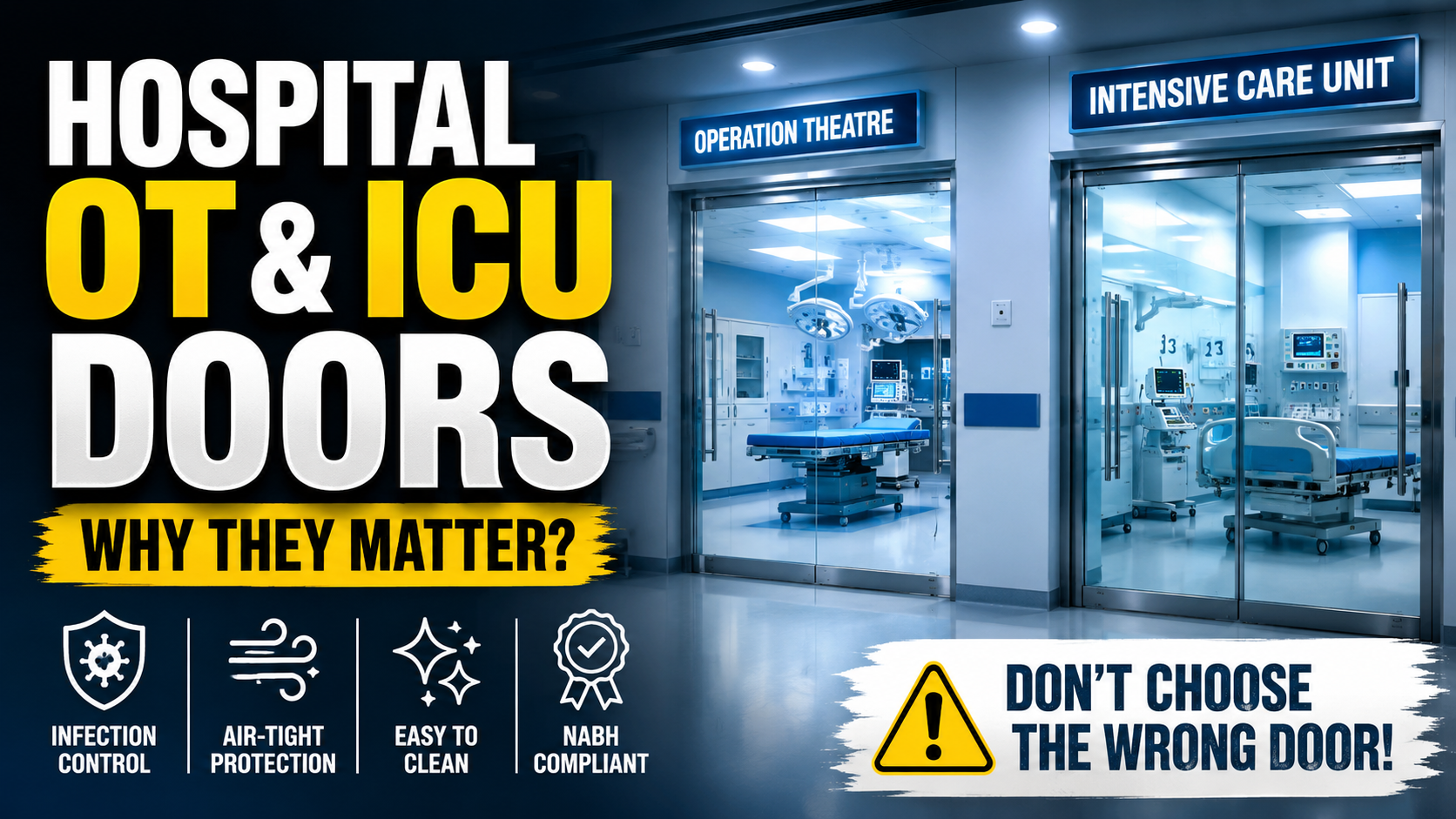
Why Material Selection Matters More Than Most Buyers Realize
One major misconception in healthcare projects is assuming all metal doors perform similarly.
They do not.
Material quality directly affects hygiene performance, durability, maintenance, and lifecycle cost.
In healthcare environments, common door materials include:
- Powder-coated galvanized steel
- Stainless steel
- Aluminium systems
- PUF-insulated composite doors
Each has specific operational implications.
Galvanized steel doors are widely used because they offer structural strength and cost efficiency. However, powder coating quality becomes critical. Poor coating quality starts peeling within a short time in aggressive cleaning environments.
Stainless steel performs better in highly corrosive or heavy sanitation areas, especially where strong disinfectants are regularly used. But fabrication quality becomes extremely important. Poor welding or polishing creates visible hygiene issues.
PUF-insulated doors become relevant where thermal stability or acoustic control is required in addition to hygiene performance.
The bigger issue is not just material selection. It is execution quality.
A technically correct material can still fail because of:
- Poor edge finishing
- Weak frame alignment
- Incorrect hardware integration
- Improper gasket installation
- Bad anchoring during installation
- Low-quality automation systems
This is why experienced healthcare contractors focus heavily on site coordination during installation.
The Hidden HVAC Connection Most Teams Ignore
Many hospital teams treat HVAC and doors as separate scopes.
This creates one of the biggest execution gaps in controlled environments.
OT and ICU doors directly affect HVAC performance because airflow behavior depends on room sealing quality.
For example, in a positive pressure OT, the room must maintain higher pressure than adjacent areas. If door leakage exceeds acceptable levels, pressure stability becomes difficult even when AHU performance is technically correct.
Then the blame shifts toward HVAC systems, balancing issues, or HEPA performance, while the actual leakage source may be around door edges or improperly sealed frames.
This becomes more serious in:
- Isolation ICUs
- Negative pressure rooms
- BSL facilities
- Sterile pharma environments
- Infection control zones
Door selection must align with HVAC design logic from the beginning.
This is one reason why integrated healthcare infrastructure execution performs better than fragmented vendor coordination.
When wall panels, doors, HVAC coordination, and cleanroom execution are handled in isolation, compatibility problems appear during commissioning.
Common Mistakes Seen in Real Hospital Projects
One recurring mistake is selecting doors purely based on appearance.
A visually clean door does not guarantee pressure performance, hygiene compatibility, or durability.
Another common issue is ignoring hardware quality.
Low-grade hinges, handles, and automation systems start failing early under high-usage hospital conditions. Once the door alignment shifts, sealing performance also starts deteriorating.
Floor coordination is another overlooked area.
Many automatic sliding OT doors fail because flooring levels were not coordinated correctly before installation. Even small unevenness affects smooth movement and sealing efficiency.
Poor wall-door integration is equally common. In modular cleanroom systems, the frame must integrate properly with wall panels. Improvised site modifications usually create long-term maintenance problems.
Improper vision panel installation also becomes a contamination concern. If glazing systems are not flush and sealed correctly, moisture and dust accumulation begins inside the joints.
One more issue rarely discussed openly is service accessibility.
Many imported or poorly supported automation systems create maintenance dependency problems later. Hospitals struggle with spare parts, servicing delays, and downtime.
In healthcare environments, operational continuity matters more than visual sophistication.
Why Cleanability Is More Important Than Design Trends
Modern healthcare infrastructure increasingly focuses on infection prevention through surface engineering.
This changes how doors are evaluated.
Sharp grooves, decorative profiles, exposed screws, and uneven surfaces may look acceptable in commercial buildings, but they become hygiene liabilities in hospitals.
Good OT and ICU doors prioritize:
- Flush geometry
- Rounded corners
- Seamless finishes
- Chemical resistance
- Minimal dirt traps
- Easy disinfection compatibility
Cleaning teams should be able to disinfect surfaces quickly without residue accumulation.
This becomes particularly important after the pandemic, where hospitals started paying much closer attention to infection-sensitive infrastructure design.
The operational reality is simple.
If a door becomes difficult to clean consistently, contamination risk increases regardless of HVAC sophistication.
Why Door Automation Is Not Always the Right Choice
Automatic sliding doors are becoming common in modular OTs and advanced healthcare facilities. They improve workflow, reduce touchpoints, and support smooth patient movement.
But automation is not automatically the best solution everywhere.
In smaller facilities or poorly coordinated projects, automatic systems sometimes create unnecessary maintenance burden.
Selection should depend on:
- Patient movement frequency
- Sterility requirements
- Space availability
- Electrical backup reliability
- Maintenance capability
- Traffic intensity
In some ICUs, high-quality manual hermetic swing doors perform more reliably over long operational periods than low-grade automation systems.
Technology should support operations, not complicate them.
Compliance Is Not Just Documentation
Many project discussions mention NABH, GMP, WHO, or ISO compliance casually.
Actual compliance is operational.
A door may technically match dimensional specifications but still fail environmental expectations due to poor installation or inadequate sealing.
Healthcare compliance depends heavily on execution quality.
This includes:
- Proper frame integration
- Air leakage control
- Surface hygiene
- Material compatibility
- Pressure retention
- Cleanability
- Hardware reliability
In pharmaceutical and healthcare projects, inspectors increasingly focus on functional performance, not just visual completion.
That shift is important.
Hospitals and pharma facilities are moving toward lifecycle-oriented infrastructure evaluation rather than cosmetic project delivery.
For healthcare environments aligned with NABH standards, infection control infrastructure must support cleanability, zoning, and operational hygiene requirements. WHO infection prevention guidelines also emphasize environmental control in healthcare settings.
Relevant references:
What Buyers Should Evaluate Before Finalizing OT or ICU Doors
Many procurement decisions focus heavily on initial pricing.
That approach creates problems later.
A lower-cost door may appear commercially attractive during procurement but generate repeated operational expenses through:
- Seal failure
- Automation breakdown
- Corrosion
- Alignment issues
- Surface deterioration
- Maintenance downtime
Buyers should evaluate:
- Surface finish quality
- Frame rigidity
- Sealing mechanism
- Hardware durability
- Service support
- Integration capability
- Chemical resistance
- Ease of cleaning
- Pressure compatibility
- Installation experience
Site execution capability matters as much as manufacturing quality.
Even a technically strong product can fail because of poor installation practices.
This is why experienced healthcare infrastructure teams increasingly prefer integrated execution partners capable of handling both manufacturing and site coordination.
For specialized applications, buyers often evaluate systems such as OT doors and ICU doors based on sealing performance, cleanability, and long-term operational reliability rather than only aesthetics.
In larger projects involving controlled environments, integration with turnkey healthcare infrastructure execution becomes equally important.
The Future of Healthcare Doors Is Moving Toward Performance-Based Infrastructure
Healthcare infrastructure expectations are changing rapidly in India.
Hospitals are no longer evaluating infrastructure only during project handover. They are evaluating maintenance burden, infection control performance, and lifecycle efficiency.
This is pushing demand toward:
- Better airtightness
- Higher cleanability standards
- Antimicrobial finishes
- Reliable automation
- Better panel-door integration
- Faster maintenance access
- Long-life hardware systems
The shift is particularly visible in:
- Corporate hospitals
- High-end surgical centres
- Oncology facilities
- IVF labs
- Pharma manufacturing
- Diagnostics laboratories
Future-ready healthcare infrastructure will increasingly depend on systems that support operational consistency rather than just project completion.
That includes doors.
Conclusion
In healthcare and controlled environments, doors are not secondary architectural components. They are operational infrastructure systems.
A properly designed OT or ICU door supports pressure control, hygiene maintenance, contamination prevention, and workflow efficiency every single day. A poorly selected or poorly installed system eventually creates operational risks that become expensive to correct later.
The most successful healthcare projects are usually the ones where door planning starts early, coordination happens properly, and execution quality is treated seriously from the beginning.
Because in sterile environments, small infrastructure decisions create major operational consequences.
FAQs
What is the difference between a regular hospital door and an OT door?
An OT door is designed for controlled sterile environments. It includes airtight sealing, flush surfaces, hygienic finishes, and compatibility with pressure-controlled HVAC systems.
Why are airtight doors important in operation theatres?
Airtight doors help maintain positive pressure conditions inside the OT, reducing contamination risk and supporting sterile surgical environments.
Which material is best for ICU and OT doors?
The choice depends on application requirements. Powder-coated galvanized steel, stainless steel, and insulated composite systems are commonly used based on hygiene, durability, and operational needs.
Are automatic sliding doors necessary for every OT?
Not always. Automatic systems work well in high-traffic or advanced modular OTs, but high-quality manual hermetic doors can also perform effectively depending on project requirements.
How do OT doors affect HVAC performance?
Improper sealing or alignment causes air leakage, which disrupts pressure stability and airflow control in controlled healthcare environments.
Where can specialized healthcare doors be used besides hospitals?
They are also widely used in pharmaceutical cleanrooms, diagnostics laboratories, isolation zones, IVF labs, food processing facilities, and electronics manufacturing environments.
For broader healthcare infrastructure applications, many facilities also evaluate cleanroom door systems and integrated cleanroom solutions depending on environmental control requirements.